
Wildfire-Resistant Materials for Colorado Homes
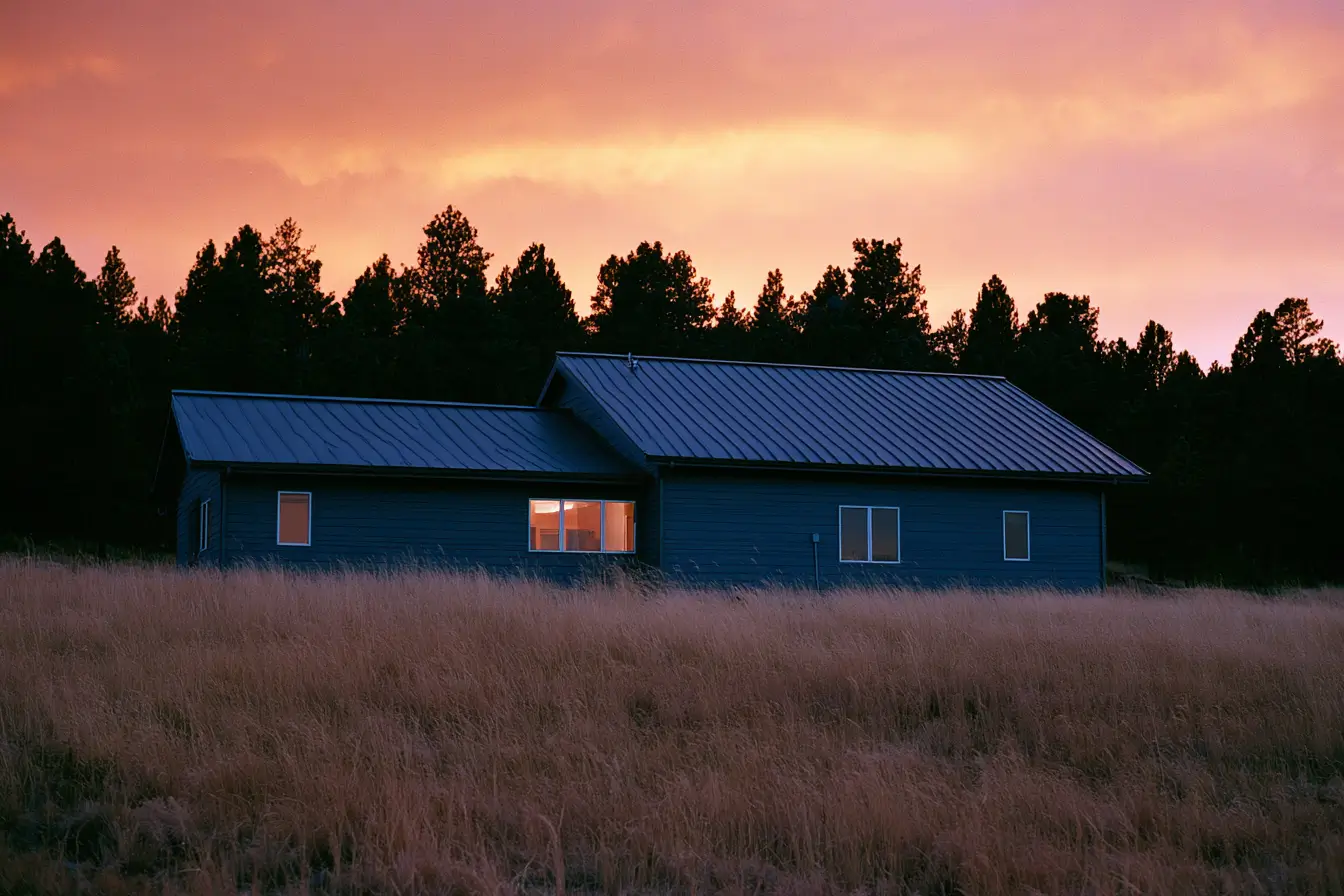
Most homes lost to wildfire in Colorado are not overrun by a wall of flame. They are lit by embers, burning fragments that travel a mile or more ahead of a fire, land on roofs and decks, and find something that catches. The Marshall Fire made the point brutally: entire suburban neighborhoods, nowhere near forest, burned because wind-driven embers found receptive material. That reality is actually good news for homeowners, because ember resistance is something materials and details can address. This article covers what to use where, what it costs, and which upgrades matter most when you are remodeling, residing, or reroofing anyway.
Thinking in terms of the ember, not the fire
Fire hardening is a materials-and-details game played at the surfaces of your house. The question for every component is simple: if a burning ember lands here and sits for ten minutes, what happens? Ask that question at the roof, the gutters, the vents, the siding, the windows, and the deck, and you have the whole strategy. Colorado's wildland-urban interface code, adopted statewide in 2025 for new construction in mapped risk areas, formalizes much of what follows, but the logic applies to any home, and a remodel is the natural time to apply it.
The roof: your largest ember catcher
The roof takes more ember exposure than every other surface combined, which is why roofing carries its own fire classification. Class A is the highest rating, and it is the only rating worth specifying in Colorado. The good news is that Class A does not force an exotic choice: asphalt shingle assemblies, metal, concrete tile, and clay tile all commonly achieve it. Wood shake does not belong on a Colorado roof, and several Front Range jurisdictions have banned it outright.
Metal deserves a special mention because it pairs fire resistance with hail performance, which is the other thing Colorado throws at roofs. If you are weighing roofing materials anyway, our comparison of asphalt, metal, and tile roofing in Denver walks through the tradeoffs.
Impact-rated shingles fit the same both-hazards logic. A Class 4 impact-rated shingle in a Class A fire-rated assembly answers hail and embers in one product, and insurers increasingly discount for it. Our article on Class 4 shingles in Denver covers how those discounts work.
The detail that gets missed on otherwise good roofs: the edges and penetrations. Open gaps at the roof edge, bird-stops on tile roofs, and debris-filled valleys are all ember shelters. A fire-hardened roof is a Class A surface with sealed edges and nothing combustible sitting on it.
Vents, gutters, and eaves: the small openings that decide outcomes
Every vent in your attic and crawlspace is a doorway. Standard quarter-inch mesh stops birds, not embers. Ember-resistant vents, either 1/8-inch metal mesh or engineered baffle designs, close that doorway for $30 to $80 per vent installed, which makes vent replacement the highest-value line item in this whole article for most homes.
Gutters full of pine needles are kindling installed at your roofline. Metal gutters with quality guards keep the fuel out, and when gutters are due for replacement anyway the upgrade cost is marginal. Our guide to gutter replacement in Denver covers materials and pricing.
Eaves and soffits finish the top of the wall. Open eaves with exposed rafter tails catch rising heat and embers; boxed-in soffits of fiber cement or metal shed them. It is unglamorous work that shows up nowhere on Instagram and matters enormously in an ember storm.
Siding and windows: the wall assembly
Siding is where fire resistance intersects with a renovation most homeowners eventually do anyway. Fiber cement is the workhorse here: noncombustible, hail-tolerant, reasonably priced, and available in profiles that read as ordinary lap siding. Stucco, brick, and stone perform even better. Vinyl melts and exposes whatever is behind it, and wood siding is fuel, however good it looks. The vulnerable zone is the bottom 6 inches of wall, where embers accumulate against the house; noncombustible material there, concrete, metal flashing, or masonry, breaks the path from ground litter to wall. If your siding is approaching end of life, our breakdown of siding replacement cost in Denver shows what the switch actually runs.
Windows fail in fires before walls do, usually when radiant heat cracks single-pane glass and the opening becomes a door for embers. Dual-pane windows with at least one pane of tempered glass are the standard hardening move, and any window replacement project should specify them in risk areas.
Decks and the five-foot zone
An attached wood deck is a fuse connected to your house. In high-risk areas the choices are noncombustible framing, fire-rated composite decking, or accepting the risk with a maintenance discipline most people will not sustain. At minimum, the area under a deck needs to be clear of storage and litter, and skirting of metal mesh keeps embers from collecting underneath.
The cheapest hardening of all is the first five feet around the house: rock mulch instead of wood mulch against the foundation, no junipers or ornamental grasses against the wall, firewood stored away from the structure. It costs a weekend and materially changes outcomes. Materials buy you resistance; the five-foot zone decides whether the materials get tested at all.
Sequencing this into a remodel
Almost nothing in this article is worth doing as a standalone demolition project. All of it is worth doing when the component is already being touched. Reroofing? Specify Class A assembly, sealed edges, ember vents. Residing? Fiber cement with a noncombustible base course. Replacing windows? Tempered dual-pane. Building or rebuilding a deck? Composite and mesh skirting. Over a decade of ordinary maintenance cycles, a house can go from soft target to hardened without a single project done purely for fire.
Insurance is the quiet second reason. Colorado carriers have been repricing and non-renewing in risk areas, and documented hardening, particularly the roof rating and ember vents, increasingly shows up in underwriting decisions. Keep the receipts and the product specs.
Coordinating these choices across trades is general contractor work: the roofing crew, the siding crew, and the window installer each see only their piece, and fire hardening lives in the seams between them. That coordination is what our general contracting service is for.