
Siding Replacement Cost in Denver
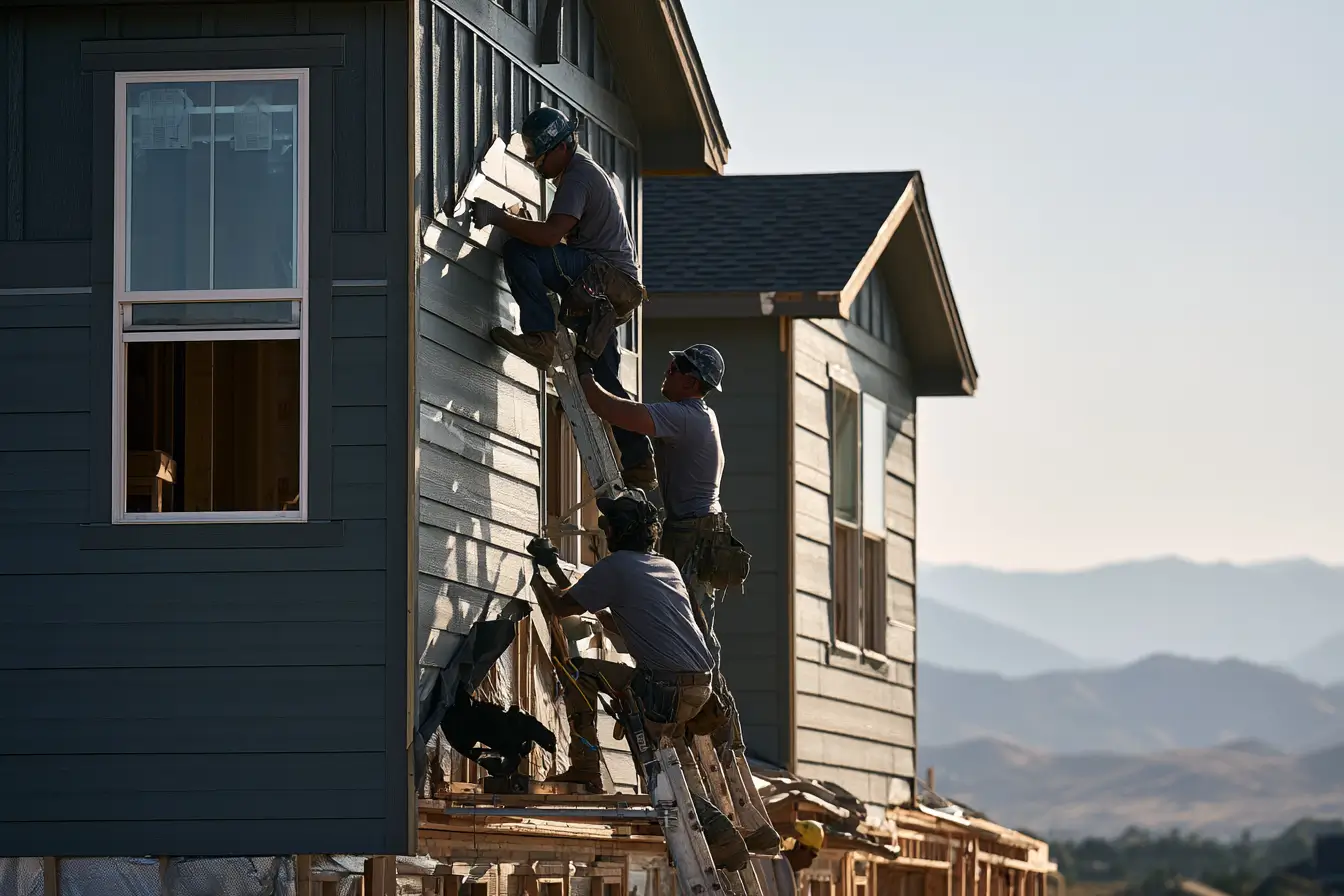
Siding is one of the few remodel projects Denver homeowners rarely choose, the house chooses it for them, through hail, sun, and age. When the moment arrives, most people discover they know less about siding than any other surface on their house, and the pricing spread between materials is wide enough to matter. This article covers what siding replacement costs in Denver, how the material choice changes the number, and the local factors, hail above all, that should shape the decision.
What siding replacement costs in Denver
For a typical two-story Denver home, full siding replacement generally runs $12,000 to $35,000, with the spread driven mostly by material and the condition of what's underneath. As a per-square-foot anchor: vinyl typically installs in the $4 to $8 range, fiber cement in the $7 to $13 range, and engineered wood between the two. Premium materials, steel, stucco repair-and-replace, real wood, push higher.
Two line items surprise people. Tear-off and disposal of the existing siding is real money, especially with multiple layers. And what's found under the old siding, deteriorated sheathing, missing house wrap, old moisture damage, is the change-order zone of siding work, worth a contingency of 10% to 15% on older homes.
The Denver factor: hail
The Front Range is one of the most hail-active regions in the country, and siding here should be chosen with that fact in the room. Vinyl's price advantage erodes when a storm cracks a wall of it, and matching discontinued vinyl profiles for partial repairs is its own quiet misery. Fiber cement takes hail substantially better, and steel siding, less common residentially, essentially shrugs at it.
This is also an insurance conversation. Hail damage to siding is a common Front Range claim, and insurers increasingly distinguish between cosmetic and functional damage, some policies now carry cosmetic-damage exclusions for exactly this. Knowing what your policy covers before choosing material is genuinely part of the siding decision here, in a way it isn't in most markets. The claims side has its own playbook, and our guide to filing a hail damage insurance claim in Denver walks through it.
Material tradeoffs, honestly
Vinyl is the budget option and a legitimate one: lowest install cost, no painting, decent lifespan. Its weaknesses are hail fragility, appearance up close, and temperature behavior, Denver's freeze-thaw swings and intense UV age it faster than milder climates do.
Fiber cement (Hardie and peers) is the Front Range workhorse: hail-resistant, fire-resistant, paintable, and long-lived. It costs more to install, it's heavy and labor-intensive, and it will want repainting on a 10-to-15-year cycle at altitude UV. For most Denver replacements it's the value answer once hail enters the math.
Engineered wood splits the difference: warmer appearance than fiber cement, lighter install, good impact resistance, at a mid-range price. Its long-term moisture performance depends heavily on install quality, flashing and clearances done right.
Steel costs more up front and outperforms everything on hail, worth a look if you're on your second hail claim and done with the cycle. Roofs face the same math, which is why Class 4 shingles have become the Front Range default up top.
What determines install quality
Siding is a water-management system that happens to be visible. The parts that matter most are the parts you'll never see again: house wrap integrity, flashing at windows, doors, and horizontal transitions, and correct clearances at grade and rooflines. A beautiful siding job over skipped flashing is a rot delivery mechanism with a warranty argument attached.
This is also where bids diverge. A bid meaningfully under the field on identical material is usually thinner on exactly these invisible layers, ask every bidder to specify wrap, flashing approach, and trim details in writing, and the comparison gets honest quickly.
Common mistakes homeowners make
Choosing material on price-per-square alone in a hail region is the big one, the cheap wall you buy twice isn't cheap. Re-siding over damaged sheathing because tear-off revealed it and nobody wanted the change order is second, you're wrapping new skin around an unresolved problem. Skipping the insurance review before a hail-prone material choice is third. And scheduling exterior paint-grade materials against Denver's weather without buffer, siding and painting both have temperature windows, and fall projects regularly collide with them.
What this means for your project
Budget realistically for the material tier that matches Front Range weather, get bids that specify the water-management details rather than just the visible product, and carry a contingency for what tear-off reveals. If hail history is part of why you're replacing, involve your insurer early and understand your policy's cosmetic-damage stance before you choose the next material. Gutters usually come off and back on with the siding, and if yours are near end of life, our guide to gutter replacement in Denver covers doing both in one mobilization.
Siding is a twenty-plus-year decision made under a hailstorm's schedule. The homeowners who come out ahead treat it as an envelope upgrade, water, impact, and insulation details included, rather than a color change, because the color is the only part of the project that was ever going to be easy.