
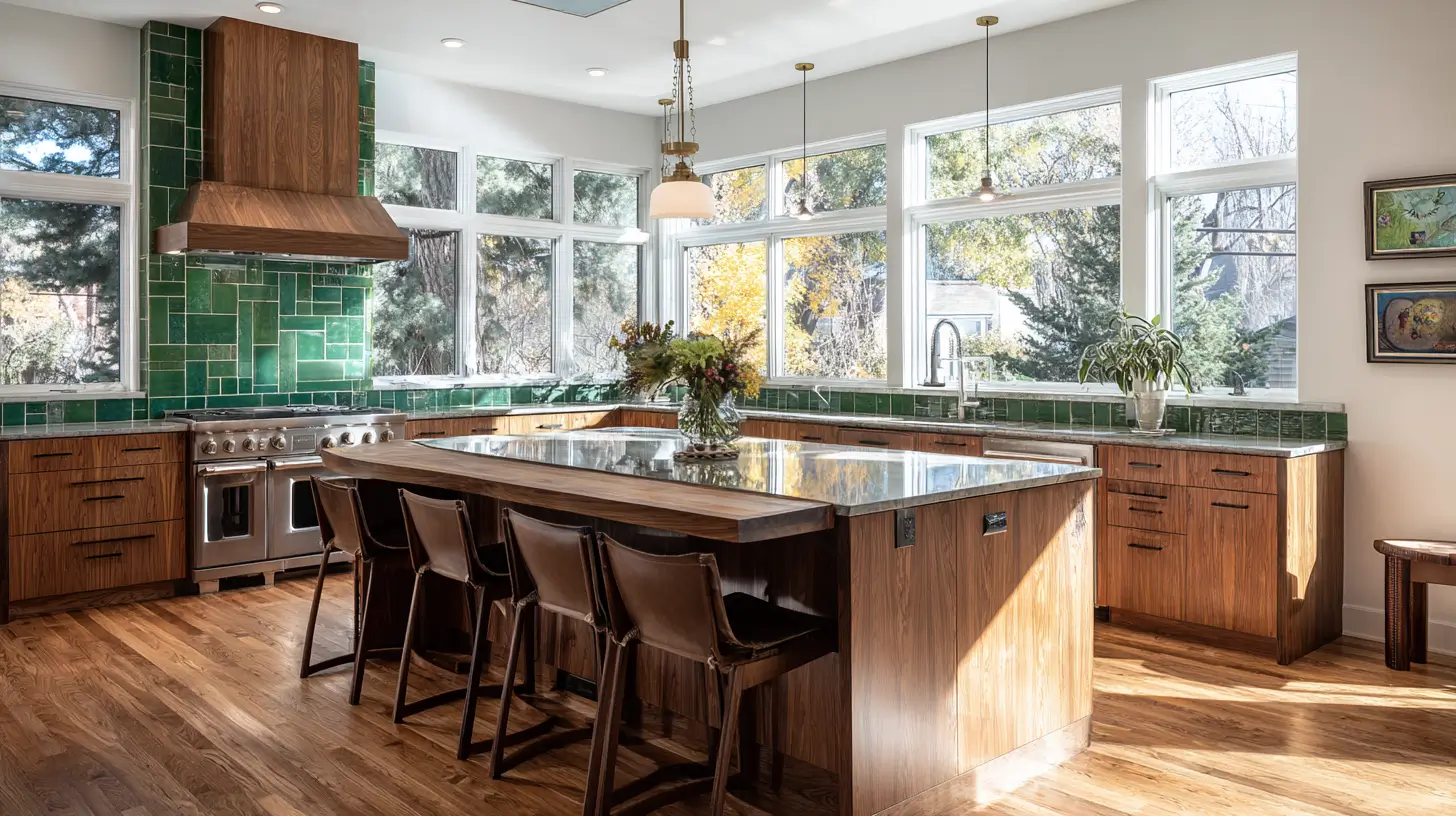
When Denver homeowners start planning a kitchen remodel, most conversations go straight to countertops, cabinets, and appliances. Those decisions matter -- but they're secondary to the one that determines everything else: the layout. Get the layout right and your kitchen works effortlessly. Get it wrong and no amount of expensive finishes will fix the daily frustration of a space that fights you.
Denver homes come in a wide range of configurations -- bungalows in Wash Park, ranch homes in Lakewood, new builds in Stapleton, Victorian row homes on Capitol Hill. Each footprint has its own constraints and opportunities, and the best kitchen layout for your home depends on the shape of the space, how your household actually uses the kitchen, and what you're willing to move structurally.
Here's a practical breakdown of the most common kitchen layouts and when each one makes sense for a Denver home.
Why Layout Matters More Than Finishes
A kitchen layout determines traffic flow, how many people can work in the space at once, where storage is concentrated, and how the kitchen connects to the rest of the home. These aren't aesthetic decisions -- they're functional ones that affect your daily life for as long as you own the house.
The classic rule of thumb is the "work triangle" -- the distance between the sink, refrigerator, and cooktop. Efficient kitchens keep that triangle compact so you're not crossing the room between every step of cooking. Modern kitchen design has evolved beyond the strict triangle toward "work zones," but the principle is the same: the layout should minimize unnecessary movement and maximize usability.
Related: Kitchen remodel decisions that affect your home long after the project is done
The One-Wall Kitchen
All cabinets, appliances, and counters run along a single wall. This is the most space-efficient layout and works well in smaller Denver homes, condos, and open-plan spaces where the kitchen shares square footage with a living or dining area.
The limitation is obvious: you have one continuous run of counter space, which limits how many people can cook simultaneously. If you're working with a one-wall kitchen and want to add prep space, a rolling island or a peninsula extending from one end of the run can dramatically improve usability without requiring structural changes.
Best for: Denver condos, studio apartments, and small bungalow kitchens with open floor plans.
The Galley Kitchen
Two parallel walls of cabinets and counters with a corridor between them. Galley kitchens are efficient workhorses -- professional kitchens are essentially galley layouts scaled up. The work triangle is tight, storage is maximized, and a single cook can move between prep, cooking, and cleanup without wasted steps.
The challenge in Denver homes is that galley kitchens can feel narrow and closed off, especially if the corridor is less than four feet wide. Opening one end to an adjacent room, removing upper cabinets on one side to install open shelving, or adding a skylight can make a galley feel significantly more spacious without changing the footprint.
Best for: Older Denver homes with defined kitchen rooms, row homes, and any space where square footage is limited but efficiency matters.
Related: How much does a Denver kitchen remodel cost in 2026?
The L-Shaped Kitchen
Cabinets and counters run along two adjacent walls, forming an L. This is one of the most versatile layouts and works well in a wide range of Denver home sizes. It naturally creates a corner that, when handled correctly, offers excellent storage and counter space. It also opens up the kitchen to adjacent spaces, making it a natural fit for open-concept floor plans.
The corner is the tricky part. Standard corner cabinets waste space and are notoriously hard to access. Lazy Susans help, but the best solution in a full remodel is a pull-out corner drawer system or a blind corner optimizer -- hardware that brings items at the back of the corner fully within reach.
Best for: Mid-size Denver homes, open-concept renovations, and kitchens that need to serve both cooking and casual dining functions.
The U-Shaped Kitchen
Cabinets and counters on three walls, forming a U. This layout maximizes storage and counter space and is ideal for households that cook seriously or have multiple people in the kitchen at once. With three walls of work surface, you can dedicate zones to prep, cooking, and cleanup without any of them interfering with each other.
The constraint is space -- a U-shaped kitchen needs enough square footage to keep the corridor between the two parallel arms at least five feet wide. In tighter Denver kitchens, a U can feel cramped. It also doesn't lend itself to open-concept living as naturally as an L or island layout.
Best for: Larger Denver homes, dedicated kitchen rooms, and households where cooking is a priority over open-concept flow.
Related: Textures that change how your kitchen feels, not just how it looks
The Island Kitchen
An island layout starts with an L or U configuration and adds a freestanding island in the center of the space. Islands are the most requested feature in Denver kitchen remodels, and for good reason -- they add prep space, casual seating, storage, and a social hub that connects the kitchen to the rest of the home.
But islands only work if the space around them is adequate. You need at least 42 inches of clearance on all sides for a functional single-cook kitchen, and 48 inches if multiple people will be moving around simultaneously. An island that's too large for the space creates more problems than it solves.
If your kitchen can't accommodate a fixed island, a large rolling prep table gives you most of the benefit without the commitment -- and it can be moved when you need the floor space.
Best for: Open-concept Denver homes, kitchen renovations where the space can support it, and households that entertain.
What About Removing a Wall?
One of the most common questions we hear from Denver homeowners is whether removing a wall to open up the kitchen is worth it. In many cases the answer is yes -- but it depends entirely on what's in that wall.
Load-bearing walls require structural support (a beam) before they can be removed. Walls with plumbing or HVAC in them add cost and complexity. In older Denver homes, you may also encounter knob-and-tube wiring or asbestos insulation that needs to be addressed before the wall comes down.
None of these things are dealbreakers -- they're just costs that need to be factored into the decision upfront. A good general contractor will assess the wall before you commit and give you a realistic picture of what opening it up actually involves.
Related: How plumbing and electrical affect the price of your remodel
Getting the Layout Right Before Anything Else
The sequence matters in a kitchen remodel. Layout decisions -- including whether to move walls, plumbing, or the appliance configuration -- need to be locked in before cabinets are ordered or countertops are selected, because those choices dictate dimensions. Changing the layout mid-project is expensive and disruptive.
If you're planning a kitchen remodel in Denver and want to talk through what layout makes sense for your specific space, Denver Dream Builders offers free consultations with no pressure and no obligation. We'll look at your kitchen, ask the right questions about how you use it, and give you an honest assessment of your options.
Reach out here to get started.