
Should You Reface or Replace Your Cabinets?
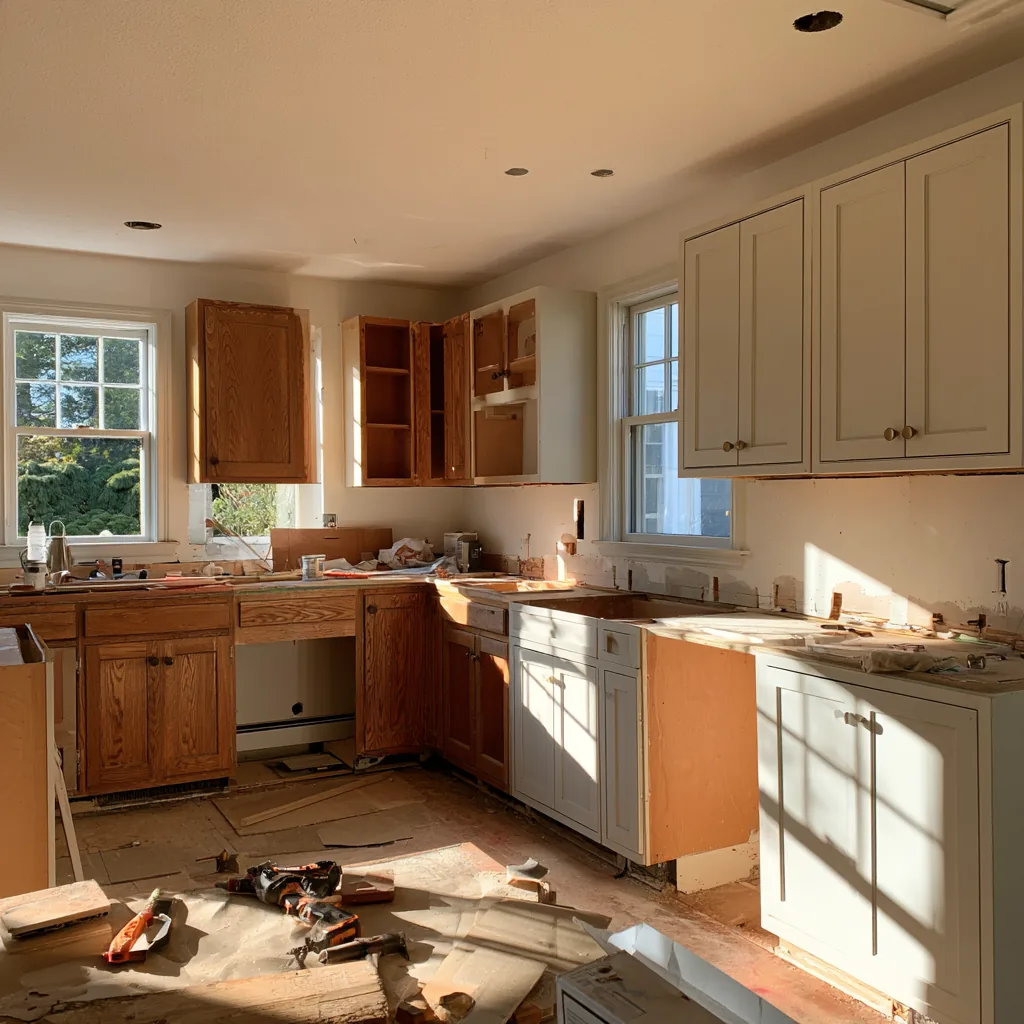
Cabinets are usually the largest single cost in a kitchen remodel, often 25 to 40 percent of the budget. So when a kitchen feels dated but basically works, the question comes up quickly: can we keep the cabinets and just change how they look?
Sometimes the answer is yes, and it saves a lot of money. Sometimes refacing puts new doors on a kitchen that still does not work. This article explains the three options, what each costs, and how to tell which one fits your kitchen.
Refinishing, refacing, and replacing
Refinishing means painting or restaining the existing doors, drawer fronts, and frames. The cabinets stay exactly as they are. Hardware often changes. National cost guides put professional refinishing around $1,800 to $4,200 for a typical kitchen.
Refacing keeps the existing cabinet boxes but replaces the doors and drawer fronts and covers the exposed frames and end panels with new veneer or laminate. New hinges, drawer slides, and hardware are usually included. Refacing typically costs $4,200 to $10,200, with an average around $7,200, or roughly $150 to $450 per linear foot depending on material.
Replacing means removing the cabinets entirely and installing new ones. Full replacement generally starts around $10,000 for a modest kitchen with stock cabinets and climbs quickly with semi-custom and custom lines. It also usually triggers new countertops, since tops rarely survive removal intact.
Refacing generally runs 30 to 50 percent less than replacing comparable cabinets. That gap is the reason it is worth considering.
When refacing makes sense
Refacing works when three things are true.
The boxes are solid. Plywood or sturdy older cabinet boxes in good shape are worth keeping. Particleboard boxes that have swollen from leaks, especially under the sink and dishwasher, are not.
The layout works. Refacing does not move anything. If the kitchen's problems are a cramped work triangle, a missing island, or too little counter space, refacing will not solve them. We go through how layout drives kitchen function in the best kitchen layouts by room type.
The countertops can stay. Refacing is usually done with countertops in place. If you want new tops anyway, the savings case for refacing weakens, because one of its biggest advantages is avoiding the tear-out.
When refinishing is enough
Refinishing is the least expensive option, and for the right kitchen it is all that is needed. It works best on solid wood doors with a simple profile, where the problem is mostly the color: dated orange oak, a worn stain, or a finish that has yellowed. Painted cabinets can make a dated kitchen feel current for a fraction of the cost of refacing.
Refinishing has limits. It cannot change door style, so a heavily arched or ornate door stays that style under the new paint. It does not fix worn hinges or failing drawers on its own. And quality depends almost entirely on prep. Cabinets that are degreased, sanded, primed, and sprayed hold up well. Cabinets that are rolled over without proper prep start chipping at the handles within a year. If the doors themselves are the problem, refacing is the better path.
When replacing is the better call
Replace when the layout needs to change, when the boxes are damaged or poorly built, when you want features older boxes cannot accommodate, or when the kitchen is part of a larger remodel where walls, plumbing, and electrical are moving anyway.
Modern cabinets offer things refacing cannot easily add: full-extension drawer bases instead of doors and shelves, taller uppers to the ceiling, integrated appliance panels, and interior organizers built to fit. If storage is the main frustration, new cabinets usually solve it better than new doors.
Replacement also gives you a chance to fix proportions. Many older kitchens have short uppers, awkward soffits, and filler strips everywhere. Refacing preserves all of that.
Our kitchen cabinet decisions guide covers how to choose cabinet construction, finish, and storage if you go the replacement route.
What drives refacing cost
Material is the biggest variable. Rigid thermofoil and laminate are the least expensive. Wood veneer costs more and looks closer to real wood. Solid wood doors with veneered frames cost the most.
Kitchen size and the number of doors and drawers matter too, as do details like crown molding, light rail, and new end panels. Converting some door bases to drawer bases during refacing is possible but adds cost, because it involves rebuilding the interior of the box.
What each option is like to live through
Refinishing and refacing are much less disruptive than replacement. Refacing a typical kitchen is often completed in a few days to about a week of on-site work, and the kitchen stays partly usable because the sink, countertops, and appliances usually stay in place. Doors and drawer fronts are made off site, so most of the lead time happens before the crew arrives.
Replacement is a full kitchen remodel. Cabinets come out, countertops are templated after the new cabinets go in, and the tops themselves take time to fabricate. Even a straightforward cabinet replacement can leave a household without a working kitchen for several weeks, and longer when layout, plumbing, or electrical changes are involved. That disruption has its own cost, from eating out to setting up a temporary kitchen elsewhere in the house.
What separates a good refacing job
Refacing quality comes down to details that are easy to skip. The exposed cabinet frames should be cleaned, repaired, and properly prepped before veneer is applied, or the veneer will lift. End panels should be replaced or skinned so the sides of the cabinets match the new doors. Hinges should be upgraded to modern concealed soft-close hardware, and drawer boxes should be checked, since new drawer fronts on worn-out drawers with failing slides still feel like an old kitchen.
Ask any refacing contractor exactly what is included: frame treatment, end panels, hinges, slides, toe kicks, and trim. Two refacing bids can differ by thousands of dollars simply because one includes those items and the other does not.
Common mistakes
The most common mistake is refacing a kitchen whose real problem is layout. The new doors look great for a few months, and then the same frustrations return.
The second is refacing cabinets and then replacing countertops a year later. If new tops are likely soon, plan them together, because removing tops can damage refaced cabinets and the combined cost may approach replacement.
The third is choosing the cheapest finish to maximize savings. Low-grade thermofoil can peel near heat sources like ovens and dishwashers, especially in a dry climate. Spending a little more on material is usually worth it.
We cover other decisions homeowners tend to second-guess in kitchen updates homeowners regret.
What this means for your project
If your cabinet boxes are solid, the layout works, and the countertops are staying, refacing can deliver a new-looking kitchen for roughly half the cost of replacement. If the layout, storage, or cabinet construction is the real problem, put the money into replacement and fix it once.
For a sense of how cabinets fit into the full budget, see our breakdown of kitchen remodel costs. Denver Dream Builders does both full kitchen remodels and targeted updates. If you are deciding between the two, our kitchen remodeling team can look at your cabinets and tell you honestly whether they are worth keeping.