
Attic Conversion in Denver: What's Possible and What It Costs
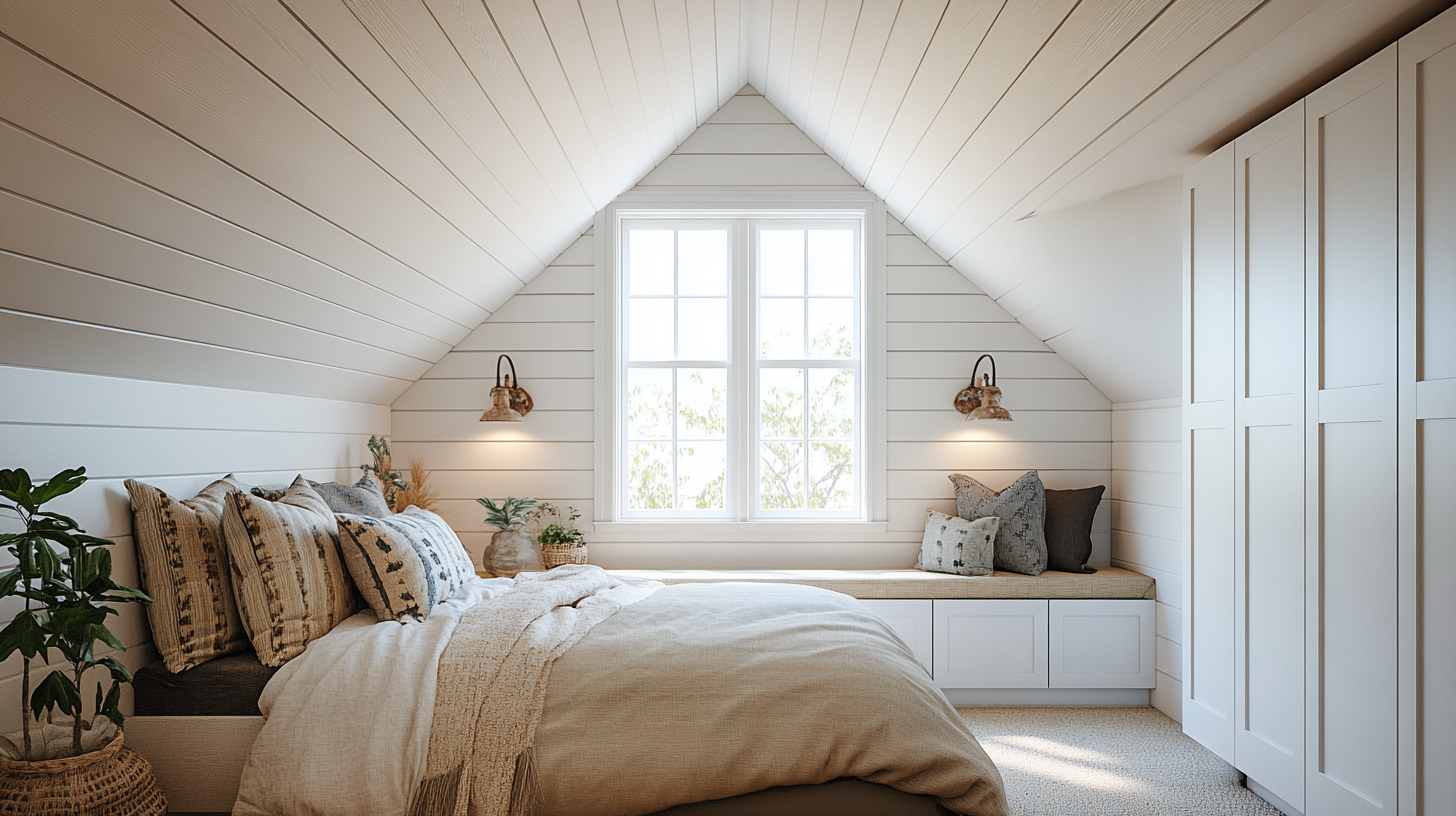
The attic in most Denver homes is somewhere between unused and barely used: a place for holiday decorations, old furniture, and insulation. When homeowners look to add usable space without expanding the footprint, the attic is often the first thing they consider. Sometimes it works beautifully, adding a full bedroom or office for a fraction of what a ground-floor addition would cost. Sometimes it does not work at all, because the structure, ceiling height, or access cannot support a conversion without enough additional cost to make a ground-floor addition the better choice.
This article covers attic conversion in Denver: the feasibility checks that determine whether a conversion is even possible, what the project actually costs, the building code requirements you have to meet, and the conversions that pay back. By the end you should know whether your attic is a viable candidate and what the realistic project scope and budget look like.
The feasibility checks at a glance
Ceiling height: 7-foot 6-inch minimum at the peak, with at least half the floor area at 7 feet or higher.
Floor framing: The existing ceiling joists usually need reinforcement to function as a floor.
Access: A code-compliant permanent staircase, not a pull-down ladder.
Egress: A bedroom conversion requires an egress window or door.
Roof structure: Trussed roofs are usually not convertible; stick-framed roofs are.
The structure question
The most important attic conversion question is whether the roof is stick-framed (rafters and ceiling joists as separate members) or trussed (engineered trusses with webbing inside the attic). Stick-framed attics have open floor area between the rafters and the existing ceiling, which is the prerequisite for any usable space. Trussed attics have webbing that fills the space, and removing that webbing requires a structural engineer's redesign of the entire roof, which is usually expensive enough to make a conversion uneconomical.
Most Denver homes built before about 1970 are stick-framed. Most homes built after 1980 are trussed. The 1970s span both. Look up in your attic before assuming feasibility: if you see a clean triangular space between the rafters, you have a stick-framed roof; if you see a maze of small triangular webs filling the space, you have trusses.
For stick-framed attics, the next question is whether the ceiling joists below can support a floor load. Ceiling joists are typically sized for ceiling loads (10 pounds per square foot), while floor joists need to support living loads (40 pounds per square foot). The existing joists usually need reinforcement (sistering with new joists, or adding a structural beam below) before they can carry floor weight safely.
Ceiling height and the half-floor rule
Denver building code (and the International Residential Code that Denver uses) requires habitable space to have at least 7 feet 6 inches of ceiling height at the peak, with the additional requirement that at least half the floor area of the room have at least 7 feet of headroom. For sloped ceilings (which all attics are), the floor area below 5 feet of headroom does not count toward the room's required square footage.
The practical implication: a Denver attic with a 7-foot peak and a steep roof pitch may not yield a code-compliant habitable room even if the space technically exists. Measure the headroom carefully across the proposed room area before assuming the conversion is feasible. Dormers (adding a vertical wall and roof section to gain headroom) can sometimes fix this but add significant cost.
Access: the permanent staircase requirement
Habitable attic space requires a permanent staircase, not a pull-down attic ladder. The staircase needs to meet code (typically 36-inch minimum width, 7-3/4 inch maximum riser height, 10-inch minimum tread depth) and connect to a finished space below. Carving out the floor area for the staircase in the level below is often the largest single space cost of an attic conversion.
The staircase usually takes 30 to 50 square feet of floor area on the level below, plus the same on the attic level. If the home does not have a logical spot for the new staircase (often a closet on the upper level that gets sacrificed), the conversion gets complicated. Some Denver bungalows handle this naturally because they have a central hall that can accommodate a stair; many ranches do not, which limits attic conversion viability.
Egress for a bedroom conversion
If the converted attic space will be used as a bedroom, it requires an egress (emergency exit) opening. The egress can be a window or a door, but it has to meet specific size requirements: a net opening of 5.7 square feet, minimum 24 inches high and 20 inches wide, with the sill no more than 44 inches above the floor.
For most attic bedrooms, this means cutting in a dormer or an egress window through the existing roof structure. Dormer egress is common and visually elegant; roof egress windows (skylight-style operable windows) are less common and only valid where they meet height-above-floor and reach requirements. The egress requirement is the most-violated rule in DIY attic conversions, and homes without code-compliant egress fail at the home inspection during resale, requiring retroactive remediation.
What an attic conversion costs in Denver
A basic attic conversion in Denver (adding insulation, finishing the floor, drywalling the walls and ceiling, adding a stair, adding HVAC supply, adding electrical) runs roughly $80,000 to $150,000 in 2026 for 400 to 700 finished square feet. That works out to roughly $200 to $250 per square foot, which is comparable to a high-quality basement finish.
Adding a bathroom raises the cost meaningfully. Plumbing rough-in through an attic is complicated (vent stacks, drain lines that have to slope), and a half bath adds $15,000 to $30,000 to the project. A full bath adds $25,000 to $50,000. The plumbing complexity is often the deciding factor between an attic conversion as a bedroom (relatively easy) and as a true suite with a bathroom (significantly more expensive).
Dormer additions, when needed for headroom or egress, add $15,000 to $40,000 depending on size and roof complexity. A shed dormer (single sloped roof) is cheaper than a gable dormer (triangular peak) and adds more usable headroom per square foot.
What attic conversion is actually for
Attic conversions work best for spaces that benefit from being separate from the main living area: a home office, a teenager's bedroom, a guest suite, an art studio. They work less well for high-traffic spaces (a family room) because the stair access discourages casual use, and for spaces that need a lot of plumbing (a second master suite) because the plumbing complexity adds disproportionate cost.
Compared to a basement finish, the attic conversion costs slightly more per square foot but adds usable bedroom count (which appraisers and buyers value more than family room square footage) and avoids the moisture issues that basements sometimes have. The home conversion guide covers how attic conversions compare to the other common Denver conversion options.
Common mistakes homeowners make
The first mistake is assuming any attic can be converted. The structure check (stick-framed vs trussed) and the headroom check should happen before any other planning, because either can disqualify the project on day one.
The second mistake is using a pull-down ladder for habitable space. This fails code, fails resale inspection, and is dangerous for daily use. Plan a permanent staircase from the beginning.
The third mistake is skipping the egress window for a bedroom. The retrofit later costs 2 to 3 times what doing it during the initial conversion would have cost, plus the home inspection failure at resale time.
The fourth mistake is undersizing the HVAC. Attic spaces are the hottest part of the home in summer and the coldest in winter (above the insulation envelope by default). Extending the existing HVAC system without sizing the ducting and equipment for the new load leaves the converted space uncomfortable year-round. Plan the HVAC scope as part of the conversion, not as an afterthought.
What this means for your decision
Start with the feasibility checks before pricing the conversion. If the roof is trussed, the headroom is short, or the home cannot accommodate a code-compliant staircase, the attic conversion is usually not the right move. Pursue a basement finish or a ground-floor addition instead.
If the feasibility checks pass, model the cost against the alternatives. A 500 square foot attic conversion that adds a bedroom and a bath at $130,000 compares favorably to a 500 square foot ground-floor addition at $250,000 to $300,000, but only if the conversion delivers the same functional use.
If you are scoping the broader project, the attic conversion sits inside the larger conversion cost framework. How converted spaces actually get used covers the room types that work in upper-level spaces specifically.
Working with a Denver general contractor
An attic conversion touches structural framing, HVAC, electrical, plumbing (if a bathroom is included), insulation, drywall, and finish work, which means it really does need a general contractor coordinating multiple trades. A good GC will start with the feasibility check, recommend a structural engineer review if needed, model the cost honestly against the alternatives, and pull the permits required for habitable space. DDB's general contracting service overview describes how we structure projects that touch multiple trades.