
Getting Bathroom Ventilation Right
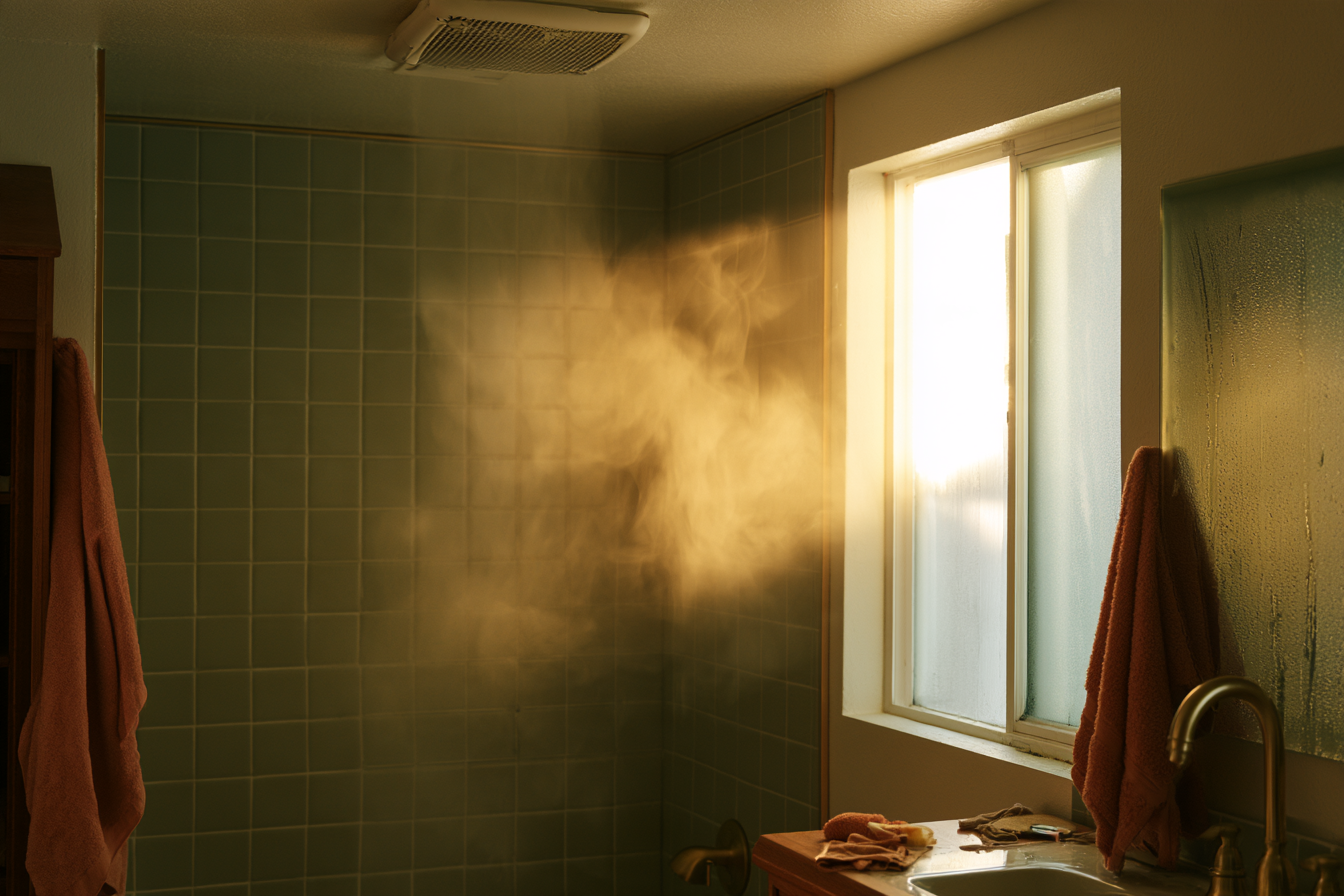
Ventilation is the least glamorous line item in a bathroom remodel and the one most likely to determine how the room holds up over ten years. Every shower puts a pint or more of water into the air, and that moisture goes somewhere: out the duct if the ventilation is right, into the paint, the drywall, the window casings, and the framing if it is not. This article covers how to size a fan properly, where the ductwork actually needs to go, and the handful of decisions during a remodel that separate a bathroom that stays crisp from one that grows problems.
What a bathroom fan is actually for
The fan's job is not to clear the mirror faster. It is to move humid air outside before moisture condenses on cool surfaces. Condensation is the mechanism behind almost every chronic bathroom problem: peeling paint, spotted ceilings, swollen trim, musty odor, and mold in the corners where wall meets ceiling. A properly sized, properly ducted, actually-used fan prevents all of it. Everything else in this article is detail in service of that one job.
An operable window does not replace a fan. Code in most jurisdictions still allows window ventilation in theory, but nobody opens a window mid-shower in January, which means in practice the room gets no ventilation for half the year.
Sizing: the CFM math
Fan capacity is measured in cubic feet per minute. The standard rule for bathrooms under 100 square feet is 1 CFM per square foot, with a 50 CFM minimum. A typical 5-by-8 hall bath needs at least 50 CFM. Larger bathrooms get sized by fixture instead: 50 CFM for each toilet, shower, and tub, and 100 CFM for a jetted tub. A primary bath with a separate water closet often wants two fans, one over the shower zone and one in the water closet, rather than a single oversized unit in the middle of the room that serves neither.
Two notes on the sticker rating. First, CFM is measured at a standard duct resistance, and a long or kinked duct run cuts real-world performance well below the box number. Second, quiet matters more than people expect. Fan noise is measured in sones, and the difference between a 4-sone builder unit and a 0.5-sone quality fan is the difference between a fan people turn off immediately and one they let run. A fan that annoys people out of using it fails at its only job, whatever the CFM rating says.
Ducting: where remodels go wrong
The most common ventilation failure we open up during Denver remodels is not the fan. It is a duct that ends in the attic. The fan pulls a pint of water out of the shower and sprays it into the insulation, where it condenses all winter. The result is wet insulation, stained ceilings below, and in bad cases, mold across the underside of the roof deck. Every bathroom exhaust duct must terminate outside the building envelope, through the roof or a wall cap, full stop.
The rest of good ducting is about resistance. Short, straight runs beat long ones. Smooth rigid duct beats flex duct. Every 90-degree elbow costs meaningful airflow. In cold climates like ours, insulating the duct where it passes through unconditioned space keeps the moist exhaust air from condensing inside the duct and dripping back through the fan housing, which homeowners routinely mistake for a roof leak.
A remodel is the one moment this is cheap to fix. Walls and ceilings are open, and rerouting a bad duct run costs a fraction of what the same work costs as a standalone repair. If you are budgeting a full renovation, ventilation and its ductwork belong on the list from the start, and our bathroom remodel cost guide for Denver shows where it fits among the bigger numbers.
Cost, and the controls that do the work for you
Replacing a fan with a better unit in the same location typically runs $250 to $550 installed. A new fan where none existed, with a new duct run and a dedicated switch, generally lands between $350 and $900 depending on duct routing and electrical access. Against the cost of repainting a ceiling every three years, or remediating a mold problem, it is one of the highest-return line items in the room.
The controls are worth the small upcharge. A humidity-sensing fan turns itself on when moisture spikes and off when the room recovers, which removes the human failure point entirely. A timer switch is the cheaper version of the same idea: the fan needs to run 15 to 20 minutes after the shower ends to actually clear the moisture, and almost nobody stands there to manage that. Set-and-forget controls are the difference between capacity on paper and dry walls in practice.
Design choices that raise or lower the moisture load
Some remodel decisions change how much work the fan has to do. Bigger showers, rain heads, and steam features all put more water into the air. Fully tiled wet zones shrug off humidity, while wallpaper and painted drywall near the shower absorb it. If you are weighing the big layout questions, a curbless walk-in shower versus a tub, glass enclosure versus open concept, ventilation belongs in that conversation, and our comparison of tub versus walk-in shower covers the tradeoffs.
Heated floors, for what it is worth, quietly help. A warm floor dries faster and keeps the room's surfaces above the condensation point. If that option is on your list, our article on heated bathroom floors in Denver covers whether the numbers make sense.
Timing inside the remodel
Ventilation work happens at rough-in, alongside plumbing and electrical, well before anything you can see takes shape. That is worth knowing because it is decided early: by the time tile is going up, changing the duct path means undoing finished work. If you want a sense of where rough-in falls in the overall sequence, our walkthrough of how long a bathroom remodel takes lays out the phases.
The test of a good contractor on this subject is a simple one: ask where the exhaust duct terminates. The right answer names a specific roof cap or wall cap. Hesitation, or any answer involving the attic, tells you what kind of work is being priced. It is a small detail, and it is exactly the kind of small detail a bathroom's next decade depends on.