
Garage Conversion to ADU in Denver
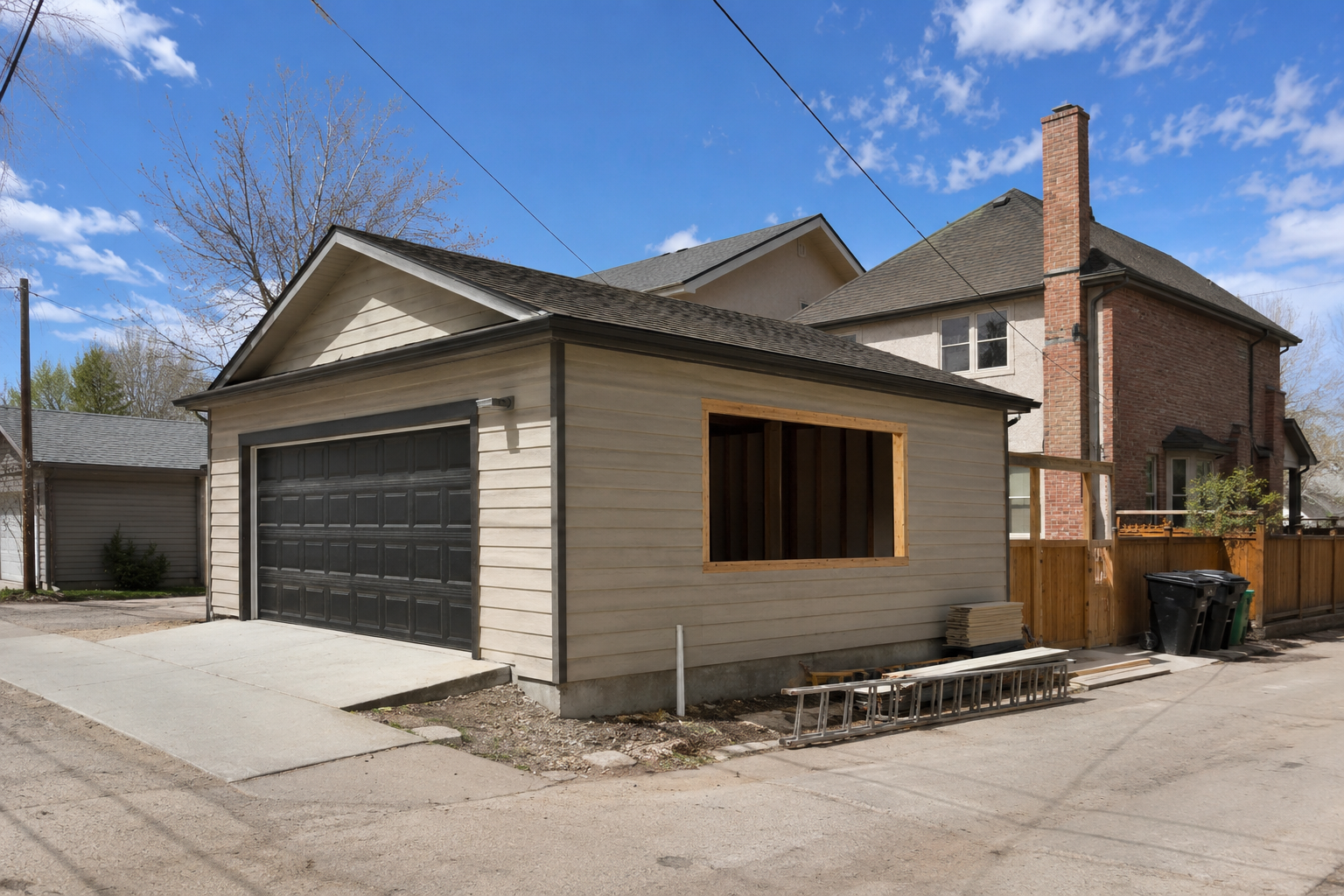
Denver homeowners considering an accessory dwelling unit often start with the same question: can we just convert the garage? It is a fair question. A detached garage already has a foundation, walls, and a roof, which suggests a faster, cheaper path to a livable unit than building from scratch. Sometimes that math holds. Other times the structure, zoning, or utilities push the project past what a new build would cost. This article walks through when a garage conversion is the right move for a Denver property, when it is not, and the specific factors that determine which side of that line a homeowner lands on.
Why a garage conversion is worth considering
The strongest argument for converting an existing garage to an ADU is cost. A detached new-build ADU in Denver, fully permitted with foundation, framing, finishes, and utility hookups, typically runs between $200,000 and $400,000 depending on size and finish level. A garage conversion that uses an existing structure of comparable size lands between $80,000 and $160,000 in most cases. The savings come from reusing the foundation, the framing, and often the roof, rather than building all three from scratch.
Timeline matters too. A new detached ADU can take 10 to 14 months from design to certificate of occupancy. A conversion, when the garage is in solid condition and the zoning allows it, often finishes in 5 to 8 months. For households planning to use the unit for aging parents, returning adult children, or rental income within a year, that timeline difference is significant.
Not every Denver garage qualifies
Denver's ADU rules expanded significantly in 2024 and 2025, but they did not turn every garage into a viable ADU candidate. Zoning is still the first gate. Some Denver zones permit attached and detached ADUs as of right; others require specific overlays or limited-use districts. A homeowner cannot assume a garage conversion is allowed simply because the property has a garage. The actual zoning designation, lot size, and existing setbacks all matter. Working through Denver's ADU permits and zoning rules before committing to a conversion path is the single highest-leverage step in the process.
The second gate is structural. Most older detached garages in Denver, especially those built before the 1980s, were not constructed to residential standards. Wall framing may be insufficient for insulation depth, roof framing may not support snow loads when interior loads are added, and the foundation may be a thin slab without footings deep enough for a frost-protected structure. An honest structural assessment early in the project tells a homeowner whether the existing shell is genuinely an asset or whether more of it will end up being torn out than reused.
Parking, setbacks, and lot coverage
Converting a garage means giving up the garage. Denver's parking minimums have loosened in many residential zones, but in some cases a property still needs at least one off-street parking space, which can force the construction of a new parking pad or a redesigned driveway. Setback rules also matter. A garage built right against a property line under older code may not meet current ADU setback requirements, and bringing it into compliance can mean rebuilding portions of the wall or relocating the structure.
Lot coverage is the third constraint. Many Denver lots already approach maximum coverage with the primary home and an existing garage. Converting the garage to an ADU does not change the footprint, but adding required features like an exterior entry, a small deck, or an expanded utility connection can push a property past allowable coverage. A surveyor or contractor familiar with Denver's coverage calculations should run the numbers before design starts.
Utility hookups are the cost driver people underestimate
The savings from reusing the garage shell are real, but they shrink fast when utility hookups enter the picture. An ADU needs its own water service, sewer connection, electrical panel, and often a separate gas line. Many older detached garages were built with limited or no plumbing and a single 15-amp circuit for a light bulb. Upgrading those services often involves trenching from the main house or from the street, coordinating with Denver Water and Xcel Energy, and paying tap fees that can run several thousand dollars per service.
This is the area where homeowners are most often surprised. A budget that looks good at the framing and finish line can land $20,000 to $40,000 higher once utility work is fully scoped. The full breakdown of what utility hookups for a Denver ADU actually involve is worth reviewing before any conversion plan is finalized.
How cost actually breaks down on a Denver conversion
For a typical 400-to-600 square-foot detached garage in solid structural condition, a Denver conversion to a one-bedroom ADU usually breaks down roughly as follows. Structural upgrades and insulation envelope: $20,000 to $35,000. Plumbing rough-in, fixtures, and water service: $18,000 to $30,000. Electrical service upgrade and rough-in: $10,000 to $18,000. Kitchen and bathroom finishes: $20,000 to $40,000. Permits, engineering, and design fees: $8,000 to $15,000. Site work and exterior modifications: $5,000 to $15,000. The remainder covers HVAC, windows and doors, flooring, and contingency.
That math typically lands a clean garage conversion between $90,000 and $150,000 all-in. A more complex conversion, especially one with significant structural work or where the existing garage needs partial demolition, can push past $200,000. At that point the cost gap to a new detached build narrows enough that the longer life and modern construction of new construction starts to look more attractive.
When a detached new build beats a conversion
There are three scenarios where building new from scratch is the better long-term move. The first is when the existing garage is structurally compromised. If the framing is undersized, the foundation is failing, or the roof needs full replacement, the savings from reuse evaporate. The second is when the garage sits in a location that limits the ADU's layout, light, or accessibility. A conversion locks the homeowner into the existing footprint, and sometimes that footprint just is not a good house. The third is when zoning, setback, or lot coverage rules force enough modification to the existing structure that a clean new build becomes simpler.
This decision parallels the broader question of whether an ADU or a home addition is the right move for a specific property. Both questions come down to the same thing: matching the project type to what the property and the household actually need, not to what looks cheapest on paper.
Common mistakes homeowners make on conversions
The most common mistake is assuming the existing garage is almost there. It rarely is. The structure is the easy part. The complexity sits in the systems work, the envelope upgrades, and the zoning compliance. Budgeting based on the visible shell almost always undershoots.
The second is choosing a contractor who has built ADUs but not specifically converted garages. The two project types share fundamentals, but conversion work involves more discovery, more variability, and more on-site decision-making. A contractor who has only done new-build ADUs will frequently misjudge what is hiding behind the existing walls. Reviewing what to look for in a Denver ADU contractor matters more on conversion projects than on new builds.
The third mistake is underbudgeting for the rental-readiness gap. A garage conversion that meets code is not the same as a garage conversion that rents well or hosts an aging parent comfortably. Sound separation, insulation depth, kitchen and bath quality, and outdoor access all affect whether the finished unit will be used as intended. Cutting corners on those items often produces an ADU that exists on paper but underperforms in practice.
The fourth is skipping the deeper cost analysis. The cost difference between conversion and new build is not a single number. It is a range that depends on the specific property, and the right comparison should always include a side-by-side estimate. Reviewing the full cost breakdown for building an ADU in Denver alongside a tailored conversion estimate is the only way to know which path actually saves money on a given lot.
What the right approach prevents
A well-executed garage conversion can deliver a comfortable, code-compliant ADU at roughly half the cost of new construction and on a noticeably faster timeline. The risk is not in the concept; it is in the discovery. Conversions surface problems that new builds avoid simply by starting clean. The homeowners who do best on these projects treat the early phase as an investigation rather than an execution, and they work with a contractor who plans for variability rather than promising a fixed scope before the walls are open.
For Denver homeowners weighing this path, the right move is usually a paid feasibility assessment before committing to design fees. The cost is modest, the data it produces is decisive, and it removes the largest source of mid-project regret on a garage conversion: discovering, three months in, that the project should have been a new build all along.