
What to Know About Utility Hookups for Your Denver ADU
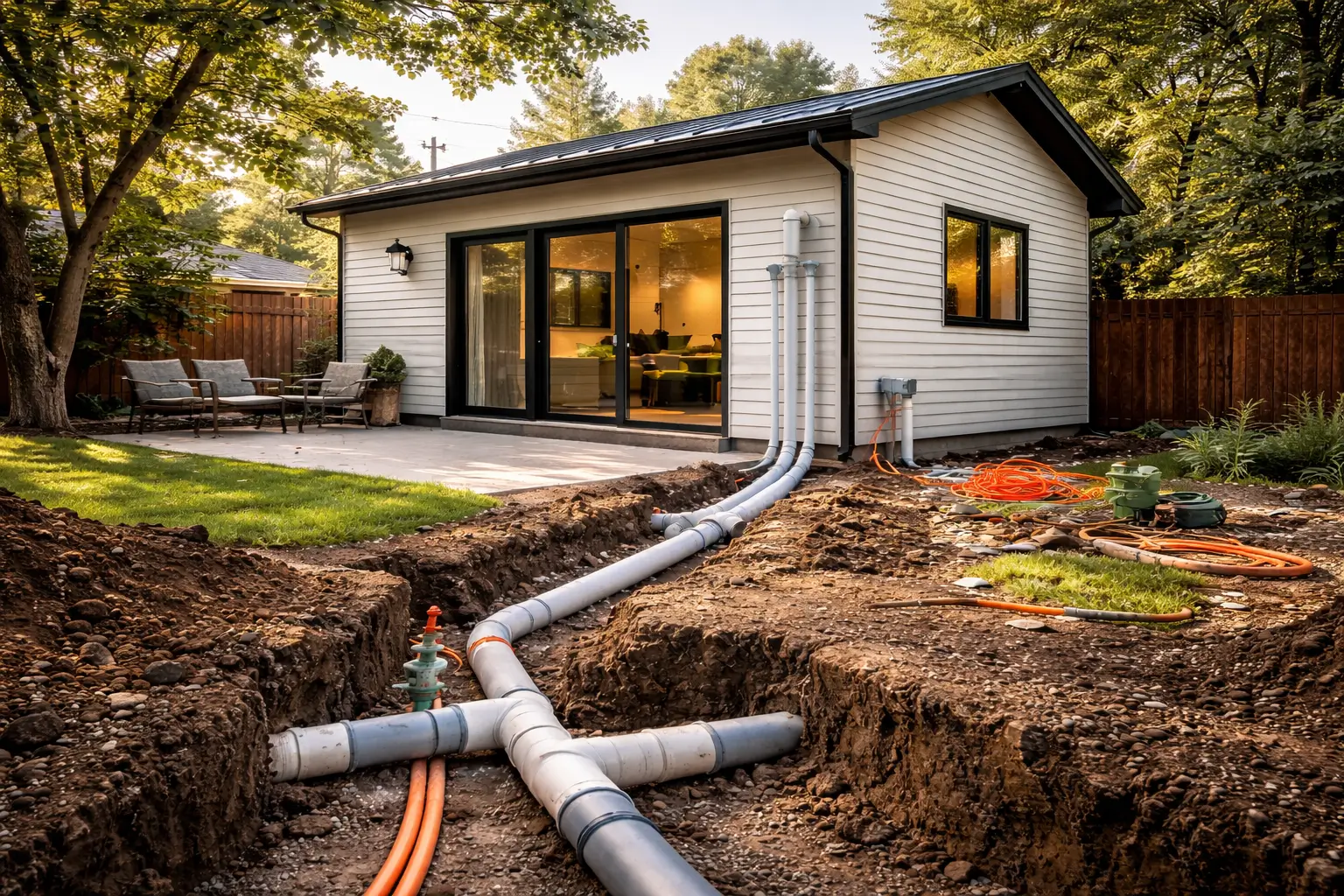
Building an ADU in Denver often raises more questions about utilities than about the structure itself. Gas capacity, electrical load, water and sewer connections, and whether separate meters make sense all affect feasibility and cost. These decisions are best understood early, before design work is finalized.
This overview explains how utility hookups typically work for a Denver ADU, where complications arise, and what homeowners should expect as part of the planning process.
Gas Service: Capacity Matters More Than Distance
Most ADUs tie into the home’s existing gas service. The key question isn’t how far the ADU is from the meter, but whether the existing service can handle the added load.
If the ADU includes a furnace, water heater, range, or fireplace, the gas utility will review total demand. Older homes often need a service upgrade to meet current requirements. That upgrade can involve new piping, a larger meter, or coordination with the utility company.
If you’re considering all-electric systems instead, gas may not be required at all. That choice shifts the load to the electrical side, which comes with its own considerations.
Electrical Service: Panel Space and Load Calculations
Electrical planning for an ADU starts at the main panel. Even well-maintained homes may not have enough spare capacity to support another dwelling unit.
A licensed electrician performs a load calculation to determine whether:
- The existing panel can be expanded
- A subpanel can serve the ADU
- A full service upgrade is required
Denver inspections are strict about load calculations, grounding, and trenching depth. If solar is planned, that needs to be accounted for at the same time to avoid redesign later.
Water and Sewer: Tying In Is Usually Straightforward, but Not Always Simple
Connecting plumbing for an ADU usually involves tapping into the home’s existing water and sewer lines. The challenge is often slope, depth, and access rather than distance.
Some properties need new sewer laterals or adjustments to meet current code. Water pressure is also reviewed to ensure both units function properly at the same time.
Because these systems are buried, conditions aren’t fully known until investigation begins. Planning time should account for that uncertainty.
Separate Meter for an ADU: When It Makes Sense
Denver allows separate metering for ADUs, but it’s not required. Many homeowners keep shared meters to reduce upfront costs and coordination.
A separate meter can make sense if:
- The ADU will be rented long-term
- Utility billing needs to stay independent
- Financing or ownership plans require it
Installing separate meters adds cost and coordination with utility providers, and it should be evaluated alongside long-term goals rather than assumed as standard.
Solar and Energy Add-Ons: Best Planned Early
Solar panels, heat pumps, and high-efficiency systems work well with ADUs, but only when planned from the start. Electrical capacity, roof layout, and inverter placement all affect feasibility.
Adding solar later is possible, but it’s often more expensive than integrating it during initial construction.
Understanding Potential Upgrade Costs
Utility upgrades are highly property-specific. Age of the home, existing infrastructure, and utility company requirements all influence cost and timing.
Rather than relying on averages, the most reliable approach is a site-specific utility review before final design decisions are made.
Planning First Prevents Surprises Later
Utility planning is less visible than finishes or layouts, but it determines whether an ADU project runs smoothly or stalls midstream. Addressing gas, electrical, and plumbing realities early creates predictability and keeps decisions grounded.
If you’re planning an ADU and want clarity before moving forward, we’ll assess your property and provide a utility plan tailored to your site.