
What Flat Roof Replacement Costs
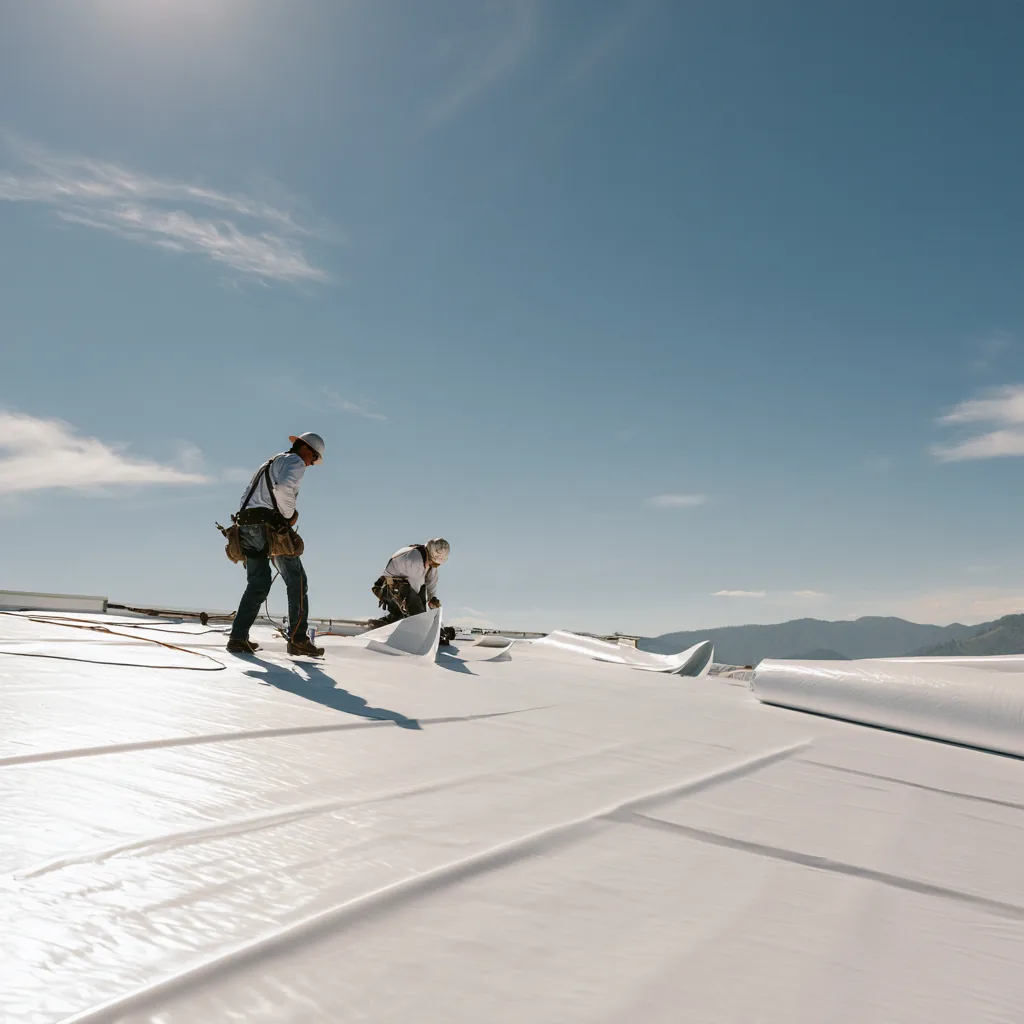
Flat roofs show up on more homes than people assume. Modern infill houses, mid-century ranches, additions, porches, garages, and rear kitchens often have a low-slope section even when the main roof is pitched. They are also the sections that leak first, because water does not run off them the way it does on a steep roof.
This article covers what flat roof replacement costs, how the common materials compare, and the decisions that matter more than the membrane itself.
What flat roof replacement costs
National cost guides put the average residential flat roof replacement around $7,400, with most projects between roughly $3,300 and $11,600. Measured by area, low-slope roofing generally runs $4 to $14 per square foot for the common membranes, with high-end systems and difficult jobs going higher.
Those averages skew small because many flat roofs are small: a porch, a garage, a rear addition. A full flat roof on a modern house can easily exceed that range once insulation, drainage corrections, and parapet details are included.
Tear-off of the existing roof typically adds $1 to $5 per square foot, depending on how many layers are there. Permits commonly add a few hundred dollars.
How the materials compare
TPO is a single-ply white membrane with heat-welded seams. It is the most common choice on new low-slope roofs today, typically running $4 to $14 per square foot installed. The white surface reflects heat, and welded seams are strong when installed well.
EPDM is a rubber membrane, usually black, with glued or taped seams. It has a long track record, tolerates temperature swings well, and runs roughly $4 to $13 per square foot. Seams are its weak point if the installation is careless.
Modified bitumen is an asphalt-based roll roofing applied in layers, often with a granulated cap sheet. It runs around $4 to $8 per square foot, handles foot traffic well, and is common on older flat roofs and porches.
Built-up roofing, the traditional tar-and-gravel system, still exists on older buildings but is rarely the best choice for a residential replacement today.
For a broader comparison of roofing materials on pitched roofs, see our article on asphalt, metal, and tile roofing.
What matters more than the membrane
Drainage. Most flat roof problems are water problems. A roof that ponds, where water sits for days after rain or snowmelt, will fail early no matter what membrane is on it. Replacement is the time to fix slope with tapered insulation, add or relocate drains and scuppers, and correct low spots in the decking.
Insulation. Many older flat roofs have little or no insulation above the deck, and energy code may require adding it when the roof is replaced. Rigid insulation under the membrane improves comfort in the rooms below and reduces the condensation and ice problems that come from warm air reaching a cold roof deck.
Edges and penetrations. Parapet walls, roof-to-wall transitions, skylights, vents, and rooftop equipment are where leaks usually start. A good bid spells out how each one will be flashed.
Decking. If water has been getting in for a while, some of the roof deck is likely soft or rotted. Expect a per-sheet replacement allowance in the bid, and expect it to be used.
Hail, sun, and snow
Low-slope roofs here take a beating from three directions. High-altitude UV exposure breaks down roofing materials faster than at sea level, which is one reason reflective membranes and protective cap sheets matter. Hail can puncture or bruise membranes, especially over soft insulation, and the damage is easy to miss from the ground. And snow sits on flat roofs instead of sliding off, adding weight and creating freeze-thaw cycles at every seam and drain.
Flat roof systems should be specified with those conditions in mind: thicker membranes, cover boards over insulation for hail resistance, and drains that stay open in winter. Snow load design is covered in our article on snow load requirements in Colorado.
If hail is the reason you are replacing the roof, the insurance process matters as much as the material. Our guide to filing a hail damage insurance claim walks through it.
Repair or replace?
Not every leaking flat roof needs to come off. A single failed seam, a cracked flashing at a vent, or a clogged drain can often be repaired for a few hundred dollars. The question is whether the leak is an isolated defect or a sign that the whole system is near the end of its life.
Replacement usually makes sense when the membrane is cracking or blistering across large areas, when there are multiple leaks in different places, when the insulation below is wet, or when the roof ponds badly enough that the slope has to be rebuilt. Wet insulation is the key detail. Once insulation under a membrane is saturated, it loses its value, adds weight, and keeps the deck damp, and patching the membrane on top does not fix it. A roofer can take core samples or use moisture scanning to find out how much of the roof is wet.
How long flat roofs last
Well-installed low-slope systems commonly last 20 to 25 years or more, and some modified bitumen and thicker single-ply systems go longer with maintenance. In high-UV, high-hail conditions, lifespan depends heavily on membrane thickness, surface protection, and how well drainage keeps water from sitting on the roof. Regular inspection, especially after hail and in spring after snowmelt, catches small problems before they become wet insulation.
Maintenance on a flat roof is simple but easy to forget, because nobody looks at it from the ground. Keep drains and scuppers clear of leaves and debris, check seams and flashing once or twice a year, and have the roof looked at after any significant hail event even if nothing is leaking yet.
Common mistakes
The most common mistake is replacing the membrane without fixing drainage. A new roof over the same low spots is a new roof that will pond.
The second is comparing bids by price per square foot alone. Two TPO bids can describe very different roofs: different membrane thickness, different insulation, different edge details, and different warranties. Ask each roofer to spell out the full system. Our article on roof warranties explains the difference between manufacturer and workmanship coverage, which matters a lot on low-slope work.
The third is ignoring the transitions. Where a flat roof meets a pitched roof or a wall, the detailing has to be right, and it is often handled by whichever crew is cheapest rather than whichever is best.
What this means for your project
For a small flat roof over a porch or garage, expect a project in the low thousands. For a full low-slope roof on a modern house, expect a larger number driven by insulation, drainage corrections, and edge details more than by the membrane itself. Choose the system for drainage and durability first, then compare price.
If your house has both pitched and flat sections, it usually makes sense to plan them together, which we cover in our breakdown of roof replacement costs. Denver Dream Builders handles low-slope and pitched roofing, including the transitions between them. Our roofing team can inspect your roof and tell you whether you need a repair or a replacement.