
What an Electrical Panel Upgrade Costs
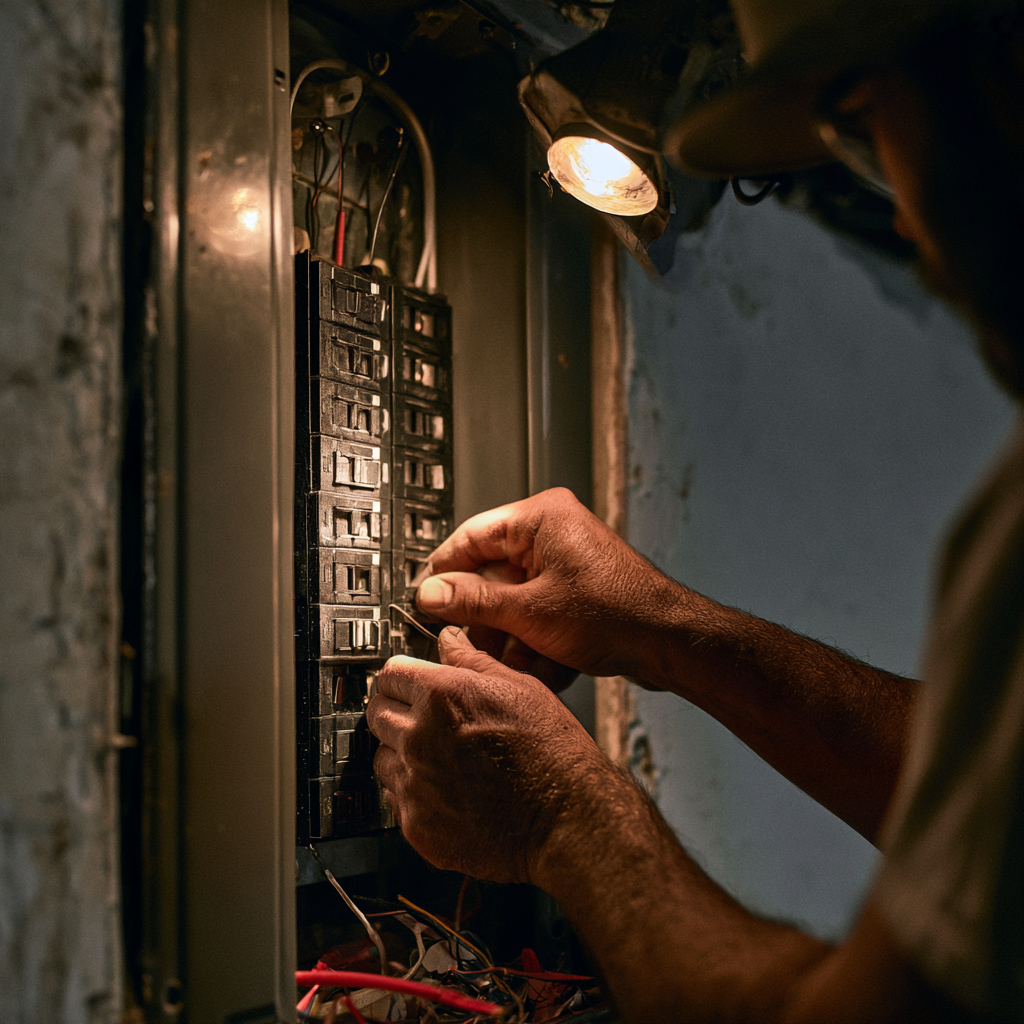
Electrical panels rarely come up when homeowners first sketch a remodel. Then the electrician walks the house, opens the panel cover, and the budget gets a new line item. Sometimes that line item is a few hundred dollars for a subpanel. Sometimes it is a full service upgrade that involves the utility company and adds weeks to the schedule.
This article explains what a panel upgrade costs, how to tell whether your project actually needs one, and what separates a simple swap from a bigger job.
What a panel upgrade costs
National cost guides put the average electrical panel replacement around $1,800, with most projects falling between $800 and $3,000. The number depends heavily on what is actually being upgraded.
Replacing a panel at the same capacity is the simplest version. If your 100 amp panel is a problem brand or worn out but the house does not need more power, a like-for-like replacement often lands at the low end of that range.
Upgrading from 100 to 200 amps is the most common remodel scenario. A new 200 amp panel typically runs $1,800 to $3,000 for the panel and installation. That number can climb when the service entrance cable, meter base, or mast also has to be replaced to carry the higher load, which is common in older homes.
Adding a subpanel usually costs $500 to $1,000. A subpanel does not add capacity to the house. It adds space for more circuits, which is sometimes all a basement finish or a detached garage needs.
Replacing an old fuse box tends to cost more, often $1,500 to $4,500, because the wiring connected to it is usually old enough to need attention too.
Permits typically add a few hundred dollars. Larger services, like a 400 amp upgrade for a big house with electric heat and car charging, can run $4,000 or more for the equipment and installation alone.
Does your remodel actually need one?
Not every remodel needs more capacity. The question is whether the new loads you are adding fit within what the house already has. An electrician answers that with a load calculation, not a guess.
The projects that most often push a house over the edge are the ones that add big, continuous electrical loads:
A kitchen remodel that switches from gas to an induction range. Heated floors in a bathroom, which we cover in our article on heated bathroom floors. A basement finish with its own bathroom, laundry, and HVAC. An ADU fed from the main house, which is a whole planning topic in itself, covered in our guide to ADU utility hookups. And increasingly, an EV charger in the garage.
If the house is on 100 amp service and the project adds two or more of those, an upgrade is likely. If the panel is simply full, a subpanel or a few tandem breakers, where code allows them, may solve it for far less.
Panels that should be replaced regardless
Some panels get replaced even when capacity is fine. Several older panel brands have well-documented histories of breakers that do not trip reliably. Insurance companies and home inspectors flag them, and electricians generally recommend replacing them during any significant remodel. If your home inspection report mentioned your panel by brand name, take that seriously.
Fuse boxes, panels with signs of overheating or corrosion, and panels with double-tapped breakers or no room left for required safety breakers fall into the same category. Modern code requires arc-fault and ground-fault protection on many new circuits, and an old panel may not be able to accept those breakers at all.
What drives the price up
The panel itself is a modest part of the cost. The variables that move the number are mostly around it.
The service entrance. Going to 200 amps often means a new meter base, new service conductors, and sometimes a new mast through the roof for overhead service. If the existing equipment cannot carry the new load, it gets replaced.
The utility. Any service upgrade requires the utility to disconnect and reconnect power, and the electrician cannot finish until that appointment happens. Scheduling that disconnect is one of the most common reasons a panel job takes longer than the actual work. Build in time for it.
Location. Moving a panel, because it sits in a closet that is becoming a bathroom or on a wall being removed, means extending every circuit to the new location. That can double the job.
The wiring it connects to. If the electrician finds ungrounded circuits, aluminum branch wiring, or old cloth-insulated wiring once the panel is open, those circuits may need work before they can be landed on new breakers. This is one of the hidden conditions that tends to show up as a change order, which we explain in how change orders actually work.
Permits and inspection
Panel and service work requires a permit and an inspection in Denver and in nearly every surrounding jurisdiction. The electrician pulls it. The inspection happens before the utility will restore permanent power on a service upgrade. Our overview of remodel permits covers how permit review fits into a larger project schedule.
A panel swapped without a permit is a problem later. It can complicate an insurance claim, and it comes up when the house is sold.
How long a panel upgrade takes
The electrical work itself is usually short. A straightforward panel replacement is often a one-day job, and the power is off for most of that day. A service upgrade takes longer because it involves more equipment outside the house and coordination with the utility.
The calendar time is what catches people. The permit has to be issued, the work has to pass inspection, and on a service upgrade the utility has to schedule the disconnect and reconnect. Depending on permit review times and utility availability, the gap between deciding to upgrade and having power on the new service can stretch to several weeks. On a remodel, that means the panel needs to be on the schedule early, ideally before demolition, so that new circuits can be landed when the electricians are ready for them rather than waiting on equipment.
If the house is occupied during the work, plan for a day without power and ask the electrician what will be temporarily out of service, especially refrigerators, sump pumps, and medical equipment.
Common mistakes
The most expensive mistake is finding out about the panel late. If the load calculation happens after cabinets are ordered and the induction range is on the truck, the upgrade becomes a scramble with utility scheduling on the critical path. Have the electrician assess capacity during design, not after demolition.
The second is upgrading only to what this project needs. If you are likely to add an EV charger, a heat pump, or an ADU in the next few years, sizing the service for that now usually costs less than doing it twice.
The third is treating the panel as a standalone job when it is really part of the project's electrical plan. We walk through how electrical work shapes overall budgets in how plumbing and electrical can affect the price of your remodel.
What this means for your project
If your remodel adds major electrical loads to a house on 100 amp service, budget roughly $2,000 to $4,000 for a 200 amp upgrade and plan for the utility appointment in your schedule. If the panel is only out of space, ask whether a subpanel solves it. If the panel is a known problem brand or a fuse box, replace it during the remodel while the walls and budget are already open.
Denver Dream Builders includes an electrical capacity check in the design phase of kitchen, basement, and whole-home projects so the panel question is answered before it affects the schedule. If you are planning a project that adds new loads, our general contracting team can help you sort out what the house actually needs.