
Driveway Materials in Denver: Concrete vs Asphalt vs Pavers
Driveways do not get a lot of attention in remodel planning until they start to fail. Cracks spread, sections sink, the surface gets ugly enough that the front of the house looks tired regardless of what else is happening, and then the decision has to happen fast. The material choice is one most homeowners only make once or twice in a lifetime, and the decision usually comes down to cost without enough thought about long-term performance or maintenance. In Denver, where freeze-thaw cycles, expansive clay soils, and deicing chemicals all attack any driveway material, the choice matters more than people assume.
This article compares the three driveway materials that cover almost every Denver driveway: poured concrete, asphalt, and pavers. It covers what each one costs installed, how each one performs in Denver's climate, what the maintenance looks like over a 20-year span, and how to think about the trade-offs honestly. By the end you should know which material fits your situation.
The materials at a glance
Asphalt: Cheapest installed cost, 15 to 20 year lifespan in Denver, periodic sealcoating required.
Concrete: Mid-range cost, 25 to 40 year lifespan, low maintenance but cracking is the failure mode.
Pavers: Highest installed cost, longest lifespan (40+ years), repairable section by section, more visual variety.
Climate factor: Denver's freeze-thaw cycles and expansive clay soil are hard on all three; installation quality matters more than the material choice.
Total cost of ownership: Pavers usually win over 30 years; asphalt usually wins over 10.
Asphalt: the budget option that needs commitment
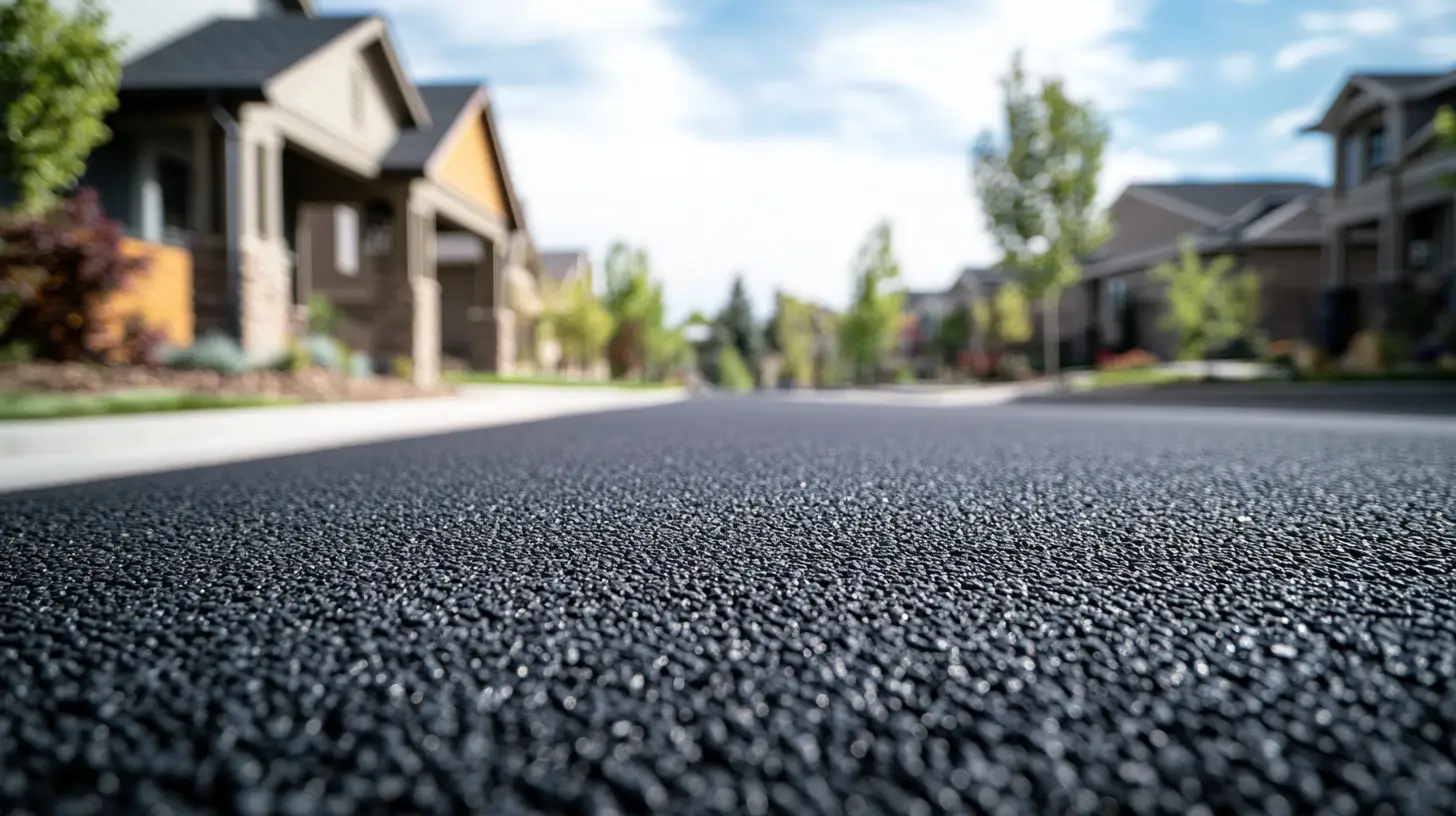
Asphalt is the cheapest of the three materials to install and the one most Denver homeowners default to when the existing driveway fails. Installed cost in Denver in 2026 runs roughly $4 to $7 per square foot for a standard residential driveway with a 2 to 3 inch surface course over a properly prepared base, putting a typical 700 square foot two-car driveway at $2,800 to $4,900.
The lifespan is the catch. A residential asphalt driveway in Denver lasts roughly 15 to 20 years before it needs full replacement, and only if it is sealcoated every 2 to 4 years to protect against oxidation and UV damage. Sealcoating runs $0.20 to $0.40 per square foot each time, which adds up to $1,500 to $3,000 over the life of the driveway. Skipping sealcoating shortens the lifespan substantially, and many Denver asphalt driveways fail in 10 to 12 years from neglect.
The freeze-thaw issue with asphalt is that water enters cracks, expands when frozen, and widens the cracks over time. Sealcoating addresses this for the first half of the driveway's life; after that, crack-sealing becomes part of the maintenance scope. Once cracks reach a quarter inch wide or the surface starts to alligator (small interconnected cracks across an area), the driveway is at the end of its life.
Where asphalt makes sense: short-term ownership horizons, tight budgets, large driveways where the cost difference per square foot adds up, and homeowners willing to commit to the maintenance schedule.
Concrete: durable, low maintenance, prone to cracking
Poured concrete is the most common driveway material in Denver and the one most homeowners assume is the default. Installed cost runs roughly $7 to $12 per square foot for a standard 4 to 6 inch slab with control joints, putting a typical 700 square foot driveway at $4,900 to $8,400. Decorative concrete (stamped, colored, exposed aggregate) adds $4 to $10 per square foot.
Lifespan is 25 to 40 years, with maintenance limited to periodic sealing (every 3 to 5 years, $0.30 to $0.60 per square foot) and crack repair as needed. A well-installed concrete driveway in Denver should make it 30 years before full replacement is justified.
The failure mode is cracking. Denver's expansive clay soils heave with moisture changes, and the freeze-thaw cycles stress the concrete from above while the soil stresses it from below. Control joints (the lines cut into the surface) are designed to crack at specific locations rather than randomly, but real-world driveways still develop random cracks over time. Most cracking is cosmetic and slow-progressing; cracks wider than a quarter inch or that show vertical displacement (one side sitting lower than the other) indicate structural issues that need attention.
Where concrete makes sense: most Denver driveways, long-term ownership, homes where the visual cleanliness of concrete matches the architecture, and budgets that can absorb the higher upfront cost in exchange for lower maintenance.
Pavers: the long-term winner
Interlocking concrete pavers are the most expensive driveway material to install but often the lowest total cost of ownership over 30 years. Installed cost runs roughly $14 to $25 per square foot in Denver in 2026, putting a typical 700 square foot driveway at $9,800 to $17,500. The cost variation reflects paver type (basic concrete pavers at the low end, clay or stone pavers at the high end), pattern complexity, and base preparation.
Lifespan is 40 to 50 years on the pavers themselves, with periodic re-sanding of the joints and occasional individual paver replacement as the only meaningful maintenance. There is no full replacement cycle: if a paver cracks or stains, it gets replaced individually for the cost of the paver and a few minutes of labor, and the driveway is whole again.
The Denver-specific advantage of pavers is flexibility under freeze-thaw. The joints between pavers absorb soil movement and freeze-thaw expansion in ways that a continuous concrete slab cannot. Pavers do not crack in the way concrete cracks; they shift instead, which is correctable. The base preparation matters more for pavers than for concrete; a paver driveway over a poorly prepared base will settle unevenly over time, and the fix is expensive (lifting sections and re-leveling).
Where pavers make sense: long-term ownership (15 plus years), homes where the visual character of the front matters (curb appeal, architecture that calls for pavers), and budgets that can absorb the upfront cost for lower long-term cost.
Total cost of ownership
The sticker price comparison favors asphalt by a wide margin. The 30-year total cost of ownership tells a different story. An asphalt driveway installed at $4,000, sealcoated 8 times at $1,500 total, repaired periodically at $1,500 total, then replaced at year 20 for $5,000, totals roughly $12,000 over 30 years.
A concrete driveway installed at $7,000, sealed 6 times at $2,500 total, repaired periodically at $1,500 total, totals roughly $11,000 over 30 years with the original driveway still serving (though showing its age).
A paver driveway installed at $12,000, with $1,000 of occasional paver replacements and re-sanding over 30 years, totals roughly $13,000 over 30 years with the original driveway still in good condition.
The three end up similar in total cost over 30 years, with the trade-off being upfront commitment versus ongoing maintenance and the timing of when the money gets spent. The honest analysis is rarely as simple as the sticker price comparison.
Common mistakes homeowners make
The first mistake is skipping the base preparation. Every driveway material is only as good as the base underneath it. A 4-inch base of properly compacted aggregate is the minimum for any driveway; clay soils may require more. Driveways installed over inadequate base settle and fail regardless of the surface material.
The second mistake is choosing the cheapest installer. The material choice is half the project; the installer is the other half. Asphalt installed by a poor crew can fail in 5 years instead of 20. Concrete poured without proper expansion joints or with the wrong mix design cracks within months. Pavers laid over a thin or uneven base settle unevenly. Spend the time to evaluate installers, not just material prices.
The third mistake is ignoring drainage. Denver's mix of snowmelt and summer rainstorms moves water across driveways, and water that ponds or runs against the foundation becomes a foundation problem. Plan the slope and drainage during the design phase, not after the fact. The concrete patio vs pavers comparison covers similar drainage considerations for outdoor living areas.
The fourth mistake is matching the driveway to the wrong reference point. A driveway material that looks great in a magazine of California ranches may look out of place on a Denver bungalow or postwar tract home. Match the material to the architecture of the home and the streetscape.
What this means for your decision
The right material depends on three things: how long you plan to own the home, how much upfront budget you have, and how much the visual character of the front of the house matters. Walk through those answers honestly before committing.
If you are scoping the broader exterior project, the driveway often gets considered alongside the entry walk, the front porch, and the landscaping. Indoor-outdoor living design covers how the front of the home connects to the rest of the property.
If the failing driveway is part of a broader exterior refresh, deck building in Denver covers another common summer project that often runs in parallel.
Working with a Denver driveway contractor
A good driveway contractor will start by assessing the existing base and drainage, recommend a material based on your specific situation rather than what they have in stock, and price the installation including proper base preparation rather than skipping that step to win the bid. They will also pull a permit if the driveway is being replaced or significantly modified, which Denver requires for most full replacements. DDB's general contracting service overview describes how we coordinate exterior projects with the right specialty trades.