
Custom Home vs. Production Home in Denver: What's the Real Difference?
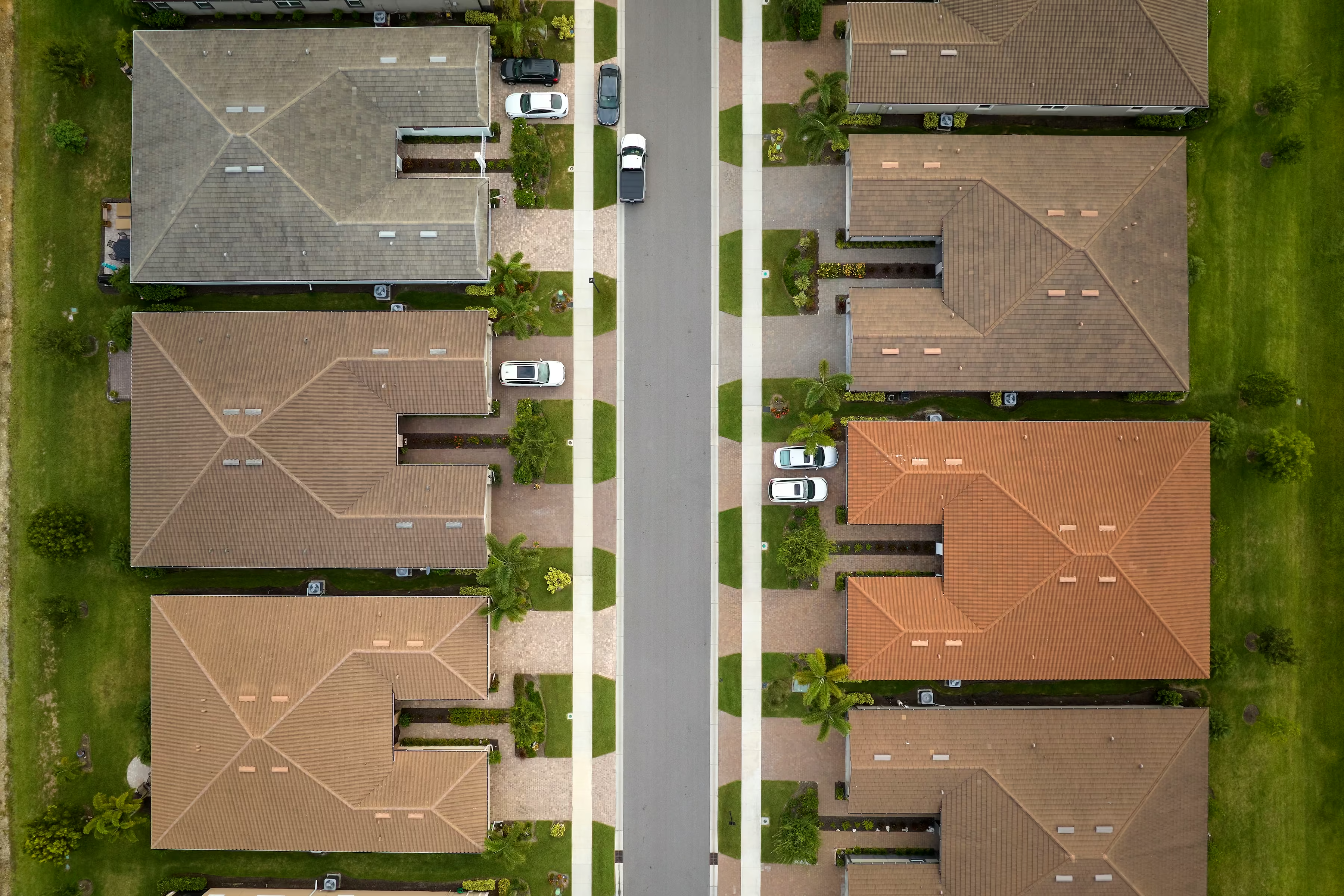
Two Ways to Build New in Denver
Denver's housing market gives homeowners two distinct paths to a brand-new home: buy into a production development where the builder controls most decisions, or work with a custom builder who builds your home to your specifications from the ground up. Both options produce a new house. Almost nothing else about them is the same.
Understanding the real differences — not just in price, but in process, timeline, and long-term value — helps you make a decision you will not regret three years in.
What a Production Home Actually Is
Production homes, sometimes called spec homes or tract homes, are built by large-volume builders who develop subdivisions and build dozens or hundreds of homes using a limited set of floor plans. Buyers typically choose a plan, select finishes from a predetermined menu, and close on a home that is either already built or built to a standardized schedule.
What You Control
In a production build, you choose from approved options — cabinet styles in three finishes, countertop materials in four colors, flooring from a set of six samples. Some builders offer "design center" upgrades that expand these choices at additional cost. What you do not control is the floor plan itself, the structural layout, ceiling heights, window placement, or any element that requires deviation from the builder's approved drawings.
Timeline
Production builds in established Denver developments typically take 6 to 10 months from contract to close. Some developments sell homes that are already framed or nearly complete, compressing this timeline further. The predictability is a genuine advantage — production builders have built the same plans dozens of times and their subcontractors work at scale.
Cost
Production homes in the Denver metro currently range from approximately $450,000 in outer-ring communities to $900,000 or more in established neighborhoods and higher-demand areas. The price reflects a standardized cost structure that large-volume builders optimize aggressively. Upgrades from the base price can add $50,000 to $150,000 depending on how far outside the standard menu you go.
What a Custom Home Actually Is
A custom home is designed and built to your specific program — your floor plan, your ceiling heights, your window placement, your material selections — on a lot you own or purchase separately. The builder constructs one home, for one client, to one set of drawings.
What You Control
Everything. The architectural design is developed around how you live — not around a floor plan optimized for production efficiency. If you want a 12-foot kitchen island, a specific orientation to capture mountain views, a mudroom designed around two large dogs, or a primary bathroom with a steam shower and a freestanding tub, you design for it from the beginning. There is no menu. There is no approval process for deviations. The design is yours.
Timeline
Custom home timelines in Denver typically run 14 to 22 months from initial design through construction completion. Design and permitting alone take 3 to 6 months before a single stake is in the ground. Construction runs 10 to 16 months depending on complexity. The timeline is longer because every decision is made from scratch — which also means every decision is made correctly for your specific situation. Our complete custom home timeline breakdown covers each phase in detail.
Cost
Custom home construction in Denver currently runs from approximately $350 to $550 per square foot for mid-to-high range builds, putting a 3,000-square-foot custom home in the $1,050,000 to $1,650,000 range before lot cost. This is the number that surprises people who are comparing custom build costs to production home prices — the comparison is not apples-to-apples. A custom home at $1.2 million is a different product from a production home at $700,000, not just a more expensive version of the same thing. See our 2026 guide to custom home costs in Denver for a full breakdown of what drives the budget.
The Honest Trade-offs
Where Production Homes Win
If timeline certainty matters — you have a lease ending, a school year to plan around, or a home sale closing on a fixed date — production builds offer a level of schedule predictability that custom construction cannot match. If budget is the primary constraint and the existing floor plans work for your family, the production path is often the more financially efficient choice.
Where Custom Homes Win
If you have a specific lot, a specific program, or a specific vision for how you want to live in your home, custom construction is the only path that actually delivers it. Production homes are designed to appeal broadly — they make compromises that work for most people. If you are not most people, those compromises accumulate.
Custom homes also tend to hold their value better in Denver's market. The uniqueness, quality of construction, and specificity of design that makes a custom home cost more to build also makes it more defensible in a softening market and more competitive in a strong one.
The Lot Question
Production homes come with the lot included. Custom homes require you to own or acquire a lot — which in Denver's established neighborhoods means competing for infill lots, paying a premium for already-scarce land, and navigating whatever conditions that lot presents. Our guide to building on a Denver infill lot covers what to know before you buy.
Which One Is Right for Your Situation
The question is not which option is objectively better. It is which option fits your timeline, budget, and vision for the home you actually want to live in.
If you want to move into a new home in the next 12 months and the available floor plans in Denver's active developments work for your family, a production build is probably the right answer. If you have a lot, a longer planning horizon, and a specific program that no existing floor plan serves, custom construction is the path worth taking.
At Denver Dream Builders, we do custom construction only. We can give you an honest assessment of whether your program, lot, and budget align for a successful custom build — and if they do not, we will tell you that too. Learn more about our custom home construction services.