
Storm Chasers vs Local Roofers in Denver
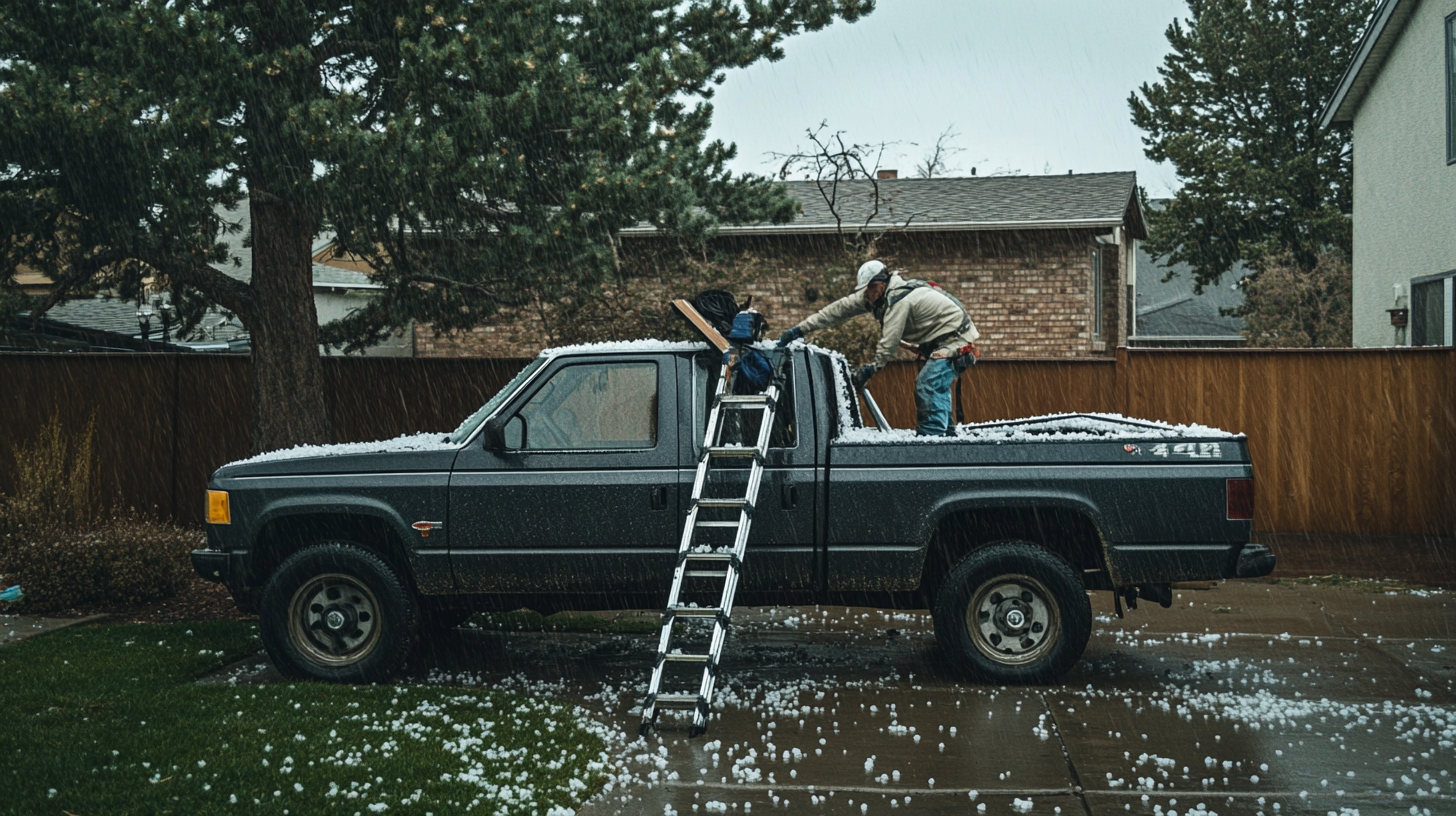
Every summer, hail hits somewhere along the Front Range. Within days, sometimes within hours, trucks with out-of-state plates start working the damaged neighborhoods, and someone in a polo shirt is standing on your porch offering a free roof inspection. These are what the industry calls storm chaser roofers, and the name sounds more dramatic than the reality. The model behind it is a straightforward business play, and once you understand it, you can make a clear-headed decision instead of a rushed one. This article explains how that model works, what it costs homeowners when it goes wrong, what Colorado law actually says about deductibles and cancellations, and how to sort a roofer who will be here in five years from one who will not, in about ten minutes of checking.
How the Storm Chaser Model Actually Works
Storm chasing is a logistics business built on insurance claims. Companies track hail maps the same way we track weather for scheduling, and when a big cell drops golf-ball hail on a Denver suburb, they mobilize crews and canvassers from wherever the last storm was. The people knocking on doors are usually salespeople, not roofers. Their job is to get a signature that day, typically on something called an inspection agreement, a contingency agreement, or in some cases an assignment of your insurance benefits.
The economics explain everything else. A storm drops thousands of damaged roofs into one zip code at once. If a company can sign a few hundred of them, run the insurance claims, and install roofs at volume pricing before moving to the next storm, the margins are strong. Speed is the whole model. That is also why the model breaks down for the homeowner two or three years later: the company that installed your roof is now four states away, the local phone number forwards to nobody, and the workmanship warranty on your paperwork has no one behind it. They are not necessarily dishonest people. They are simply structured to leave.
The Risks Nobody Mentions on Your Doorstep
The failure modes are predictable because we see them after every major hail event. Deposits vanish when a crew overextends and folds or simply moves on. Workmanship problems, missed flashing, nail pops, poorly sealed penetrations, show up a season or two later, and there is no one to call. Contingency agreements are the quieter trap: the fine print often says that if your insurer approves the claim, that company gets the job, and backing out can trigger a cancellation fee of 15 to 25 percent of the claim value. You signed away your choice of contractor before you ever saw an estimate.
Then there is permitting. Denver and the surrounding metro cities each have their own permit process, inspection requirements, and code specifics, including ice and water shield rules and ventilation requirements that a crew from Texas or Florida may not know or bother with. A roof installed without a permit, or under a permit pulled in your name instead of the contractor's, is your problem when you sell the house, not theirs. This is also where the single most common mistake happens: signing anything on the doorstep the week of the storm. There is no discount for urgency. Hail damage does not get worse in the two weeks it takes to vet a contractor and start filing a hail damage insurance claim properly. A tarp handles any active leak while you do the homework.
What Colorado Law Says, and Why It Exists
Colorado has been through enough hail cycles that the legislature stepped in. Senate Bill 38, passed in 2012, made it illegal for a roofing contractor to pay, waive, rebate, or otherwise absorb your insurance deductible. If a salesperson offers to "take care of" your deductible, they are proposing insurance fraud with your name on the claim, and we wrote a full breakdown of the Colorado law on roofers paying deductibles because the offer comes up constantly after storms.
The same law gives you real protection on contracts. If your insurer denies the claim in whole or in part, you have the right to rescind the roofing contract within 72 hours of that denial, and the contractor must return your deposit, minus the cost of any work already performed. Roofing contracts in Colorado are also required to disclose these rights in writing. A contractor who hands you paperwork without them, or who gets vague when you ask, has told you what you need to know.
How to Vet a Roofer After a Hail Event
The vetting process is not complicated, it just requires slowing down. Start with a physical address, not a PO box or an office suite leased last month. Ask for Colorado references older than two years, because anyone can produce three happy customers from last month's storm; what you want is proof the company was here before the hail and will be here after. Check that permits get pulled in the contractor's name, which you can verify through the city's permit portal, and ask directly who honors the workmanship warranty in year five and where that person's desk is. A legitimate local company answers those questions without flinching. We keep a running list of contractor red flags Denver homeowners should watch for, and most of them show up in the first conversation if you know to look.
A Fair Word About Traveling Crews
To be fair about it, not every out-of-state crew is running a scam. After a catastrophic storm, local roofing capacity genuinely cannot absorb the demand, and some traveling companies do competent work at fair prices. The problem is not the individual crew, it is the incentive structure. A company with no local reputation to protect, no office to walk into, and a business model that depends on claim volume has no reason to tell you the honest thing, which is sometimes that your roof needs a repair rather than a replacement. That call, whether to repair or replace a damaged roof, is where a local contractor's incentives and yours actually line up, because we have to stand behind the answer for years.
What to Do When the Knock Comes
Take the flyer, thank them, and sign nothing. Photograph your roof and gutters, or have someone qualified do it, file your claim on your own timeline, and get two or three bids from companies with a Colorado history you can verify. Your insurer gives you time to complete storm repairs, typically a year or more, so the pressure to decide today is manufactured, not real. If you want an assessment from a company with a Denver address and crews who will still be here when the warranty matters, our roofing team handles hail inspections and full replacements across the metro, and we will tell you plainly if your roof does not need us yet.