
What to Know About Foundation & Concrete Work in Denver’s Early Spring
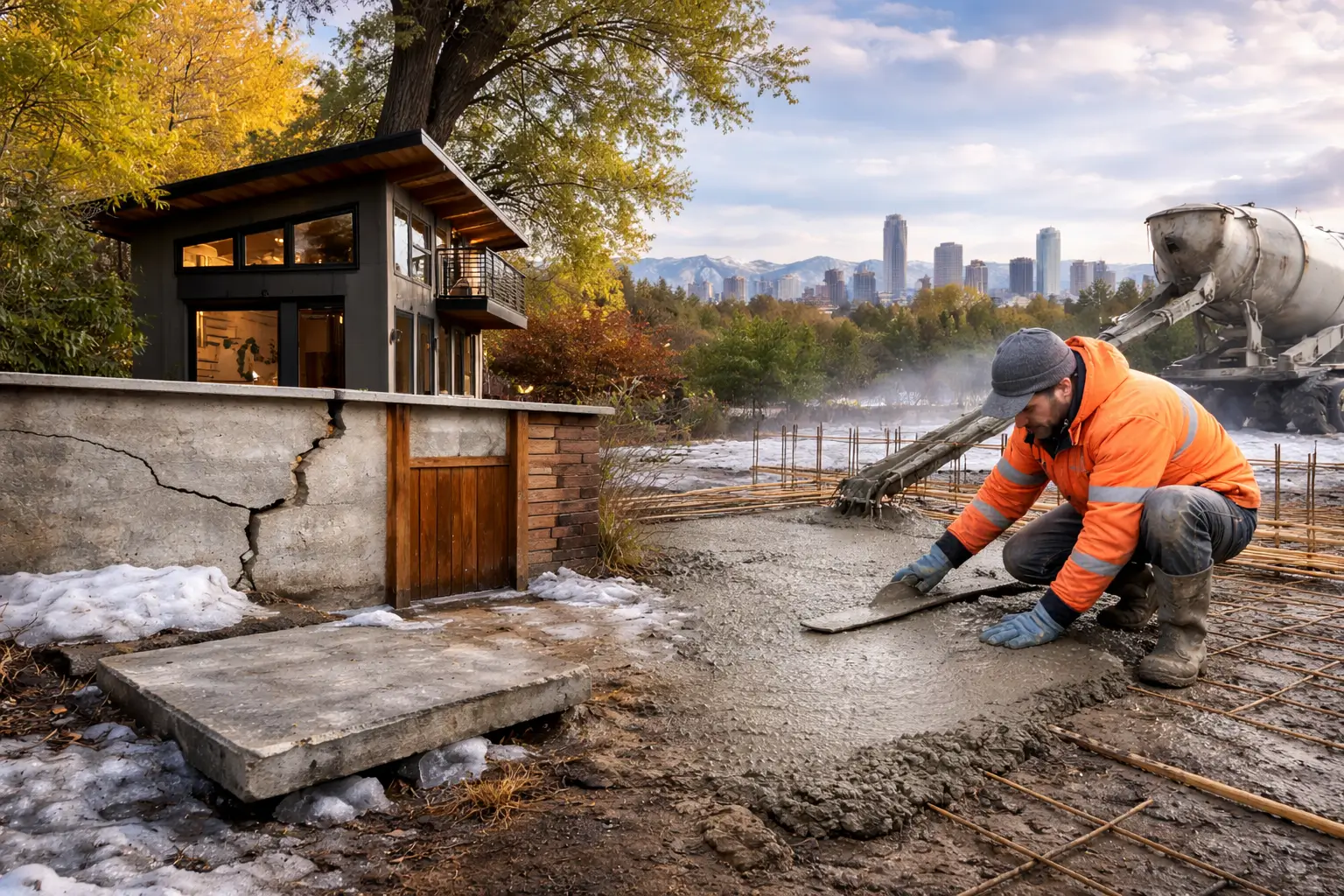
Early spring in Denver feels like the natural time to start home projects.
Snow is melting. Daytime temperatures rise. Yards start to dry out. From the surface, it looks like construction season has arrived.
But underground, the ground is still adjusting.
In Denver and across the Front Range, early spring is a transition period where soil moisture, frost depth, and temperature swings can directly affect foundations and concrete work. This is when winter damage becomes visible — and when well-intentioned repairs can go wrong if they’re rushed.
This article explains what actually happens to foundations after winter, how frost heave shows up in early spring, and how to think about timing concrete and structural work so it holds up long-term.
How Denver Winters Affect Foundations and Concrete
Denver’s climate creates challenges that aren’t always obvious to homeowners, especially those new to Colorado.
Freeze–Thaw Cycles Create Movement Below Grade
Unlike colder regions where the ground stays frozen for long periods, Denver sees repeated freeze–thaw cycles throughout winter and early spring.
Here’s why that matters:
- When soil freezes, moisture inside it expands
- When it thaws, the soil contracts and softens
- This expansion and contraction happens multiple times each season
Each cycle puts stress on foundations, slabs, and footings. Over time, that stress shows up as small shifts, cracks, or uneven surfaces.
Even properly built homes can experience seasonal movement — the key is understanding how much movement is normal and when it’s not.
Frost Heave: What It Is and Why It Becomes Obvious in Spring
Frost heave is one of the most common early spring concerns we hear about.
What Frost Heave Really Is
Frost heave occurs when three things come together:
- Freezing temperatures
- Moisture in the soil
- Frost-susceptible soils (common in parts of Denver)
As the soil freezes, ice lenses form and expand, pushing the soil upward. Anything resting on that soil — concrete slabs, walkways, garage floors — can lift with it.
This lifting doesn’t always happen evenly. One edge of a slab might rise while another stays put.
Why Homeowners Notice It After Winter
Most frost heave happens during winter, but it’s usually noticed in early spring because:
- Snow melt exposes uneven concrete
- Raised sections become visible in daylight
- Gaps appear where slabs meet walls or steps
- Doors connected to slabs may stop closing smoothly
As the ground thaws, the soil settles again. Sometimes it returns close to its original position. Sometimes it doesn’t — especially if moisture conditions have changed.
Foundation Settling After Winter: What’s Normal and What Isn’t
Not every crack or shift means your foundation is failing.
Normal Seasonal Settlement
After winter, minor foundation movement is common, especially in older homes or homes built on expansive soils.
Normal signs can include:
- Thin hairline cracks in basement walls
- Small vertical cracks in concrete
- Slight changes in door or window alignment
These issues often stabilize once the soil dries out and temperatures become more consistent.
Signs That Deserve Closer Attention
Some movement goes beyond seasonal settling and should be evaluated professionally:
- Stair-step cracks in foundation walls, especially in masonry
- Horizontal cracks, which can indicate pressure from soil
- Sudden gaps between foundation walls and framing
- Floors or slabs that slope noticeably
- Multiple cracks that appear or worsen quickly
Early spring inspections help identify these issues, but final repair decisions often depend on how the soil behaves as the season progresses.
Why Early Spring Can Be Risky for Concrete Work
Concrete performance depends on more than air temperature.
Soil Conditions Are Still Changing
After snowmelt, the ground often holds excess moisture. Even if the surface looks dry, soil below may still be soft or unstable.
Pouring concrete over soil that hasn’t stabilized can lead to:
- Settlement after curing
- Cracks that appear months later
- Uneven slabs that shift with drying soil
- Shortened lifespan of the concrete
These problems often don’t show up right away, which makes them frustrating and expensive.
Temperature Swings Affect Curing
Early spring in Denver still brings overnight freezes.
If fresh concrete freezes before it cures properly:
- Strength can be permanently reduced
- Surface scaling may occur
- Microcracks can form that worsen over time
Cold-weather protection can help, but it requires careful planning and experience to do correctly.
Timing Concrete Work in Denver: What Usually Works Best
There’s no single start date that works every year.
Flatwork Like Driveways, Patios, and Walkways
For most flatwork, late spring is more reliable than early spring. By then:
- Soil has had time to dry and settle
- Temperature swings are less extreme
- Concrete cures more consistently
Waiting often leads to fewer long-term issues.
Foundation Repairs and Structural Work
Some foundation repairs can be done earlier, depending on:
- Type of repair needed
- Soil stability at the site
- Drainage conditions
In some cases, temporary stabilization is recommended until conditions improve.
New Foundations and Additions
New foundations require careful attention to excavation, compaction, and frost depth.
Rushing this work before soil conditions are ready can create problems that last for decades, not just one season.
Why Drainage Often Matters More Than Timing
Drainage issues can make early spring foundation problems worse.
Poor drainage can:
- Keep soil saturated longer
- Increase frost heave risk
- Cause uneven settlement as soil dries
Before repairing a foundation or pouring concrete, it’s important to evaluate:
- Downspout discharge locations
- Grading around the home
- Areas where snow piles and melts
- Water pooling near foundations
In some cases, fixing drainage reduces movement enough that major repairs aren’t needed.
Why Early Spring Inspections Still Make Sense
Even if construction waits, early spring is a good time to assess conditions.
An inspection can:
- Document winter-related movement
- Distinguish frost heave from structural issues
- Help set realistic repair timelines
- Prevent unnecessary or premature work
Just understand that final recommendations may change slightly once soil conditions stabilize.
Patience Usually Leads to Better Results
We understand the desire to move quickly once winter ends.
But in Denver, waiting a few extra weeks can:
- Reduce cracking and settling
- Improve concrete strength and durability
- Prevent repeat repairs
- Protect your long-term investment
Good foundation and concrete work depends on conditions — not just the calendar.
A Practical Way to Approach Early Spring Foundation Concerns
For most homeowners, a measured approach works best:
- Inspect and document changes after winter
- Address drainage and moisture issues
- Monitor movement as temperatures stabilize
- Schedule permanent work when conditions support it
This approach protects both your home and your budget.
Final Thoughts
Early spring in Denver is a transition period, not a clean break from winter.
Understanding frost heave, soil moisture, and seasonal movement helps homeowners make smarter decisions about foundation and concrete work. In many cases, the best choice isn’t rushing to repair — it’s timing work so it lasts.
If you’re trying to figure out what makes sense for your home this season, getting a professional opinion based on current conditions can help avoid costly mistakes.