
What a Remodel Contract Should Include
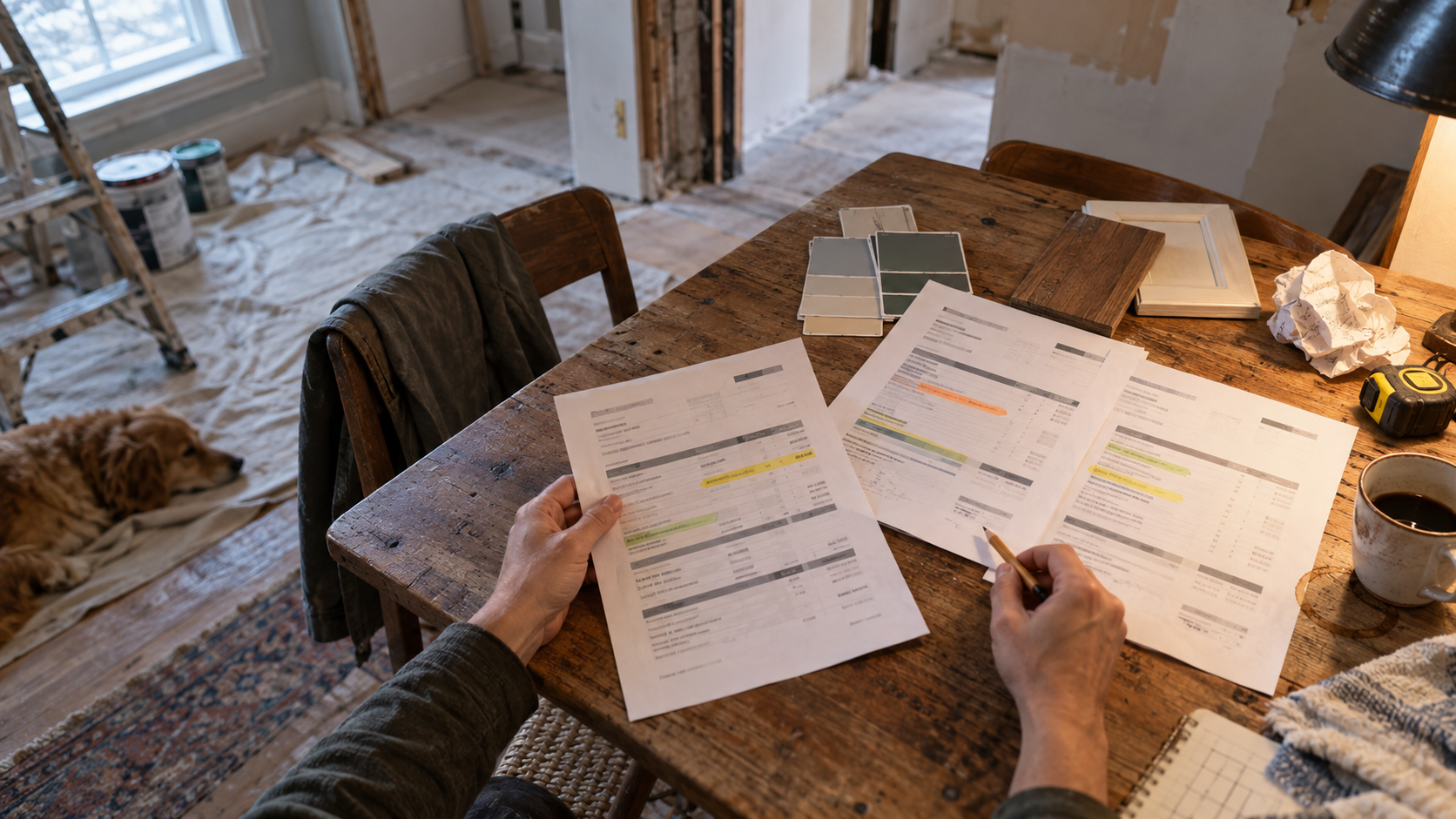
The contract is the least interesting document in a remodel and the only one that matters when something goes wrong. Most homeowners sign whatever the contractor hands over, on the theory that it's probably standard. Some of it is. But construction contracts vary enormously in how well they protect the person paying, and the gaps don't show themselves until you need the clause that isn't there. This article covers what a residential remodel contract should include, what each piece protects you from, and the terms worth negotiating before you sign rather than after.
The scope of work is the contract
Everything else in the document exists to serve the scope of work. It should describe, in specific terms, what is being built: materials, dimensions, brands or quality tiers, and which trades are included. "Remodel master bathroom" is not a scope. "Demo existing bathroom to studs; relocate shower drain per plan; install 60-inch alcove tub, tile surround to ceiling; replace vanity, toilet, and exhaust fan; paint" is the start of one.
The test for a scope is whether a stranger could read it and know what's included. Every vague line is a future disagreement, because vagueness always resolves in favor of whoever it helps at the time. If a drawing or plan exists, the contract should reference it by name and date, so there's no argument later about which version was priced.
Just as important is the exclusions section, what the price does not cover. Honest contracts have one. Permits, paint, appliances, landscaping repair, whatever it is, exclusions written down are exclusions you can plan around instead of discover.
Price, payment, and how changes get handled
The contract should state the total price and the draw schedule, payments tied to observable milestones, with a final holdback of 5% to 10% released at punch-list completion. It should also state the deposit, and for a standard remodel that deposit should sit in the 10% to 20% range, not a third of the job.
The change-order clause is the one most likely to earn its keep. It should require that changes be written, priced, and signed by both parties before the work proceeds, and it should state the markup applied to change work, typically 10% to 20% over direct cost. Without that clause, mid-project changes happen verbally, and verbal changes are where budgets go to die.
Allowances deserve their own line items, with the dollar figure and what happens if you spend under it. An allowance without a stated number isn't an allowance, it's a blank check written in your handwriting.
Schedule, delays, and what happens when it slips
A start date and a substantial-completion date belong in the contract. So does language about what extends them, weather, concealed conditions, owner changes, permit delays, because some extensions are legitimate and the contract should say which.
What you're guarding against isn't the honest two-week slip. It's the project that loses its crew to a bigger job and drifts for months. A schedule clause with defined milestones gives you standing to have that conversation early, while there's still leverage in the remaining draws. If the drift has already started, our article on what to do when your contractor stops showing up covers how to use that leverage while it exists.
Insurance, licensing, and liens
The contract should state that the contractor carries general liability insurance and workers' compensation, and you're entitled to certificates naming you as an additional insured for the project. In the Denver metro, contractor licensing is city-by-city, so the license that matters is the one for your jurisdiction, and the contract should identify who is pulling permits.
Colorado's mechanics lien law deserves particular attention. Subcontractors and suppliers who go unpaid can lien your property even if you paid the general contractor in full. The protection is a lien waiver process written into the contract: with each draw, the contractor provides waivers covering the work that draw pays for. On larger projects this is standard practice, and on any project it's a reasonable ask.
Warranty and punch list
A workmanship warranty of at least one year is the norm, and it should be written, not implied. The contract should also define completion: a punch-list process, a walkthrough, and what triggers release of the final payment. "Substantial completion" should mean the space is usable for its intended purpose, with the punch list as the documented path to fully done.
Common mistakes homeowners make
Signing a one-page proposal as if it were a contract is the most common, a price and a signature line is not a contract, it's an invoice with ambitions. Skipping the exclusions conversation is second. Letting the contractor hold the only copy of plans and selections is third, every referenced document should be in your possession too. And accepting "we'll work out the details as we go" for any money-related term, details worked out as you go are worked out with your leverage already spent.
What this means before you sign
Read the contract against a short checklist: specific scope, written exclusions, milestone-based draws with a holdback, a signed-change-order requirement with stated markup, allowance amounts, schedule language, insurance certificates, lien waivers, and a written warranty. If a term is missing, ask for it, every one of these is standard enough that the request won't surprise a legitimate contractor. Comparing how different contractors' paperwork handles these terms is also one of the fastest ways to sort the field, and it belongs alongside price when you're weighing bids against each other.
A good contract doesn't make a bad contractor good. What it does is make expectations visible on both sides, and give the project a way to survive the moments where memory and goodwill would otherwise be the only documentation. This is general information about how residential construction contracts typically work, not legal advice, for contract review on a large or unusual project, an hour of a construction attorney's time is cheap insurance.