
Spring Home Detox: 8 Pre-Remodel Inspections Every Denver Homeowner Should Do
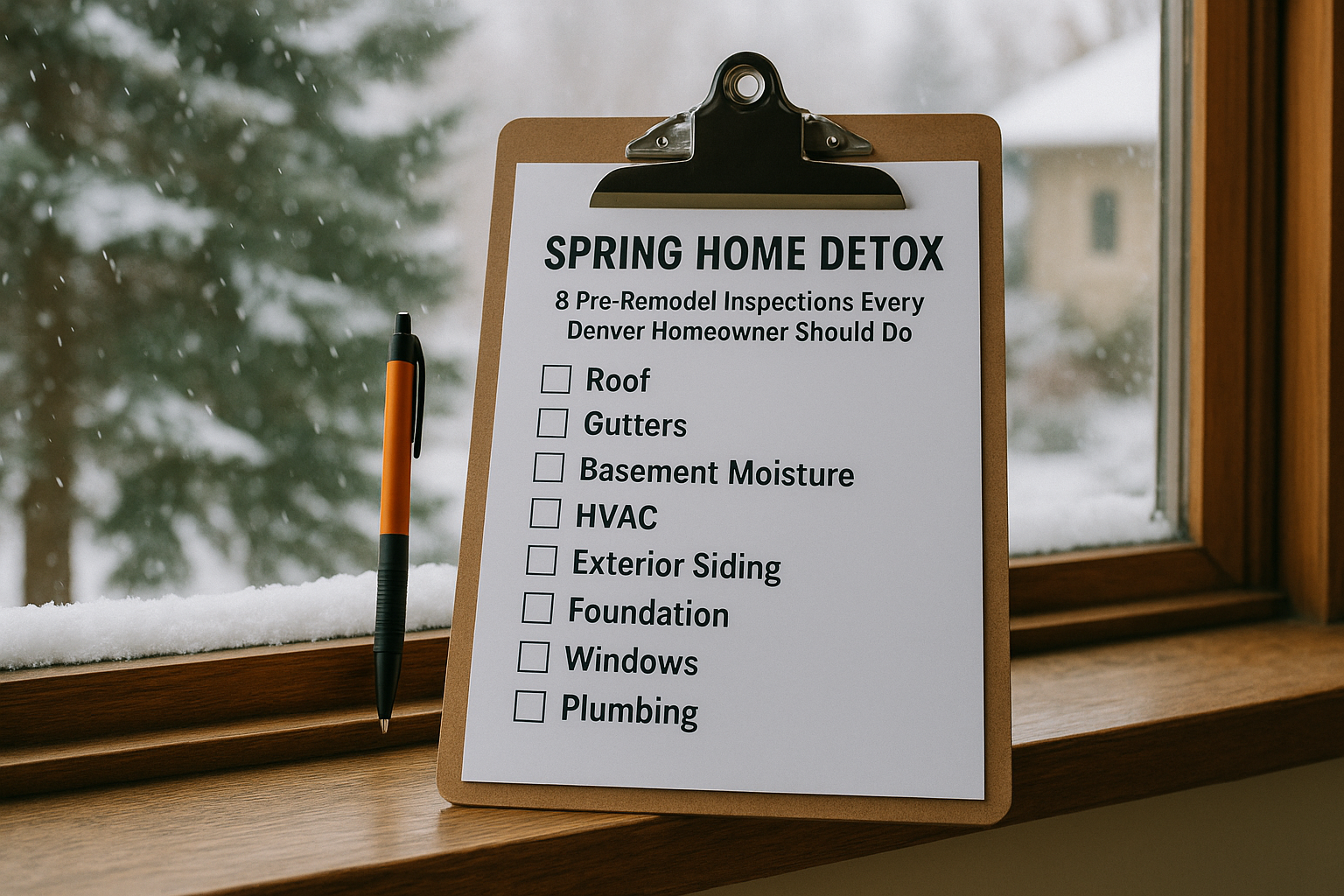
Spring in Denver is more than just snowmelt and sunshine — it’s the reset button for your home. And if you’re planning a remodel, this is the make-or-break moment to check what winter left behind.
From freeze-thaw damage to hidden leaks, skipping an early inspection can cost you later — in delays, budget overruns, or worse, foundation issues uncovered mid-project. This guide outlines the 8 most important inspections every Denver homeowner should do before scheduling contractors or finalizing remodeling plans. Each one is tailored to Colorado’s unique climate and spring remodeling cycle.
Why a Spring Home Inspection Is Critical Before Remodeling
While it’s tempting to jump straight into design decisions and contractor meetings, winter can quietly damage the very infrastructure your remodel depends on: your roof, foundation, HVAC, and more. Remodeling without addressing these issues is like painting over rust — it hides problems, rather than solving them.
In Denver, where snow load, temperature swings, and soil movement are serious considerations, spring is the best time to assess and repair. The weather is mild, contractors are ramping up, and you still have time to make smart changes before summer construction season.
Inspection #1: Roof – Your First Line of Defense
Winter storms, heavy snow, and intense freeze-thaw cycles can take a real toll on your roof — even if you didn’t notice damage while it was happening.
What to inspect:
- Missing or warped shingles (common after high wind or snow)
- Soft spots or sagging
- Ice dam residue or flashing damage
- Attic stains or mold near vents and rafters
Denver-specific tip: Ice dams are common in foothill neighborhoods and older homes with inadequate ventilation. If you notice attic moisture or odd ceiling stains, it may be from winter ice buildup forcing water backward under the shingles.
Why it matters: A remodel often includes new insulation, drywall, or layout changes. If the roof isn’t sealed properly, even a small leak can ruin everything beneath it.
Inspection #2: Gutters & Drainage – Redirect Water Before Spring Rains
Gutters clogged with debris or ice can cause water to overflow and damage your siding, fascia, or even your foundation — especially when snow melts quickly in March or April.
Check for:
- Sagging or detached gutter sections
- Ice damage or rusting seams
- Downspouts draining within 3 feet of the home
- Soil erosion or pooling near the foundation
Pro tip: A well-graded yard and extended downspouts are cheap upgrades that protect your home from basement moisture — a top concern in Denver remodels.
Inspection #3: Foundation – Watch for Movement After Winter Thaw
Denver’s clay-heavy soil expands and contracts with moisture levels. When snow melts or spring rains saturate the ground, it can cause subtle — or severe — foundation shifts.
Walk the perimeter of your home and basement to inspect:
- New cracks (especially horizontal or stair-step ones)
- Shifting steps or porch supports
- Gaps at window frames, baseboards, or door trim
- Doors and windows that now stick or don’t latch
Why it matters: Foundation movement affects everything from drywall alignment to plumbing and cabinet installation. It’s the #1 structural issue that can derail a remodel late in the process.
Inspection #4: Basement & Crawlspace – Look for Moisture or Mold
As snow melts and water seeps into the soil, any weaknesses in your home’s moisture barrier will show up here. Denver’s semi-arid climate masks the fact that crawlspaces and basements are still very prone to dampness after winter.
Inspect for:
- Standing water or new moisture
- Musty odors (a sign of poor ventilation or mold)
- White efflorescence on walls (mineral residue from water)
- Warped baseboards or soft drywall
Why it matters: Mold remediation mid-remodel can stop everything. Check early and ventilate or waterproof now — not after finishes go in.
Inspection #5: HVAC Systems – Tune Up After a Long Heating Season
Your furnace has been running hard since October, and now’s the time to ensure everything is still working — and that your air conditioning is ready for summer.
Spring HVAC checklist:
- Replace all filters (furnace and return vents)
- Clean dust buildup around floor vents and duct returns
- Check furnace components for rust or strange smells
- Test your AC unit before the first heat wave hits
- Schedule a professional HVAC inspection and cleaning
Remodel insight: If you’re adding square footage or removing walls, your HVAC will need to be rebalanced. Get ahead of it now, while you still have system access.
Inspection #6: Siding & Paint – Catch Cracks Before Moisture Sneaks In
Winter can make siding brittle and expose weaknesses in your home’s envelope — and the longer those go unsealed, the more water gets in with spring rains.
Check for:
- Peeling paint, especially near roof lines and trim
- Cracks or bulges in siding boards
- Soft spots at the base (indicates rot or pest intrusion)
- Water stains around window and door frames
Denver bonus tip: Wood siding in older neighborhoods (Berkeley, Wash Park, Park Hill) is especially vulnerable. Consider upgrading to a composite or cement-based product if repainting isn’t enough.
Inspection #7: Windows & Doors – Reseal for Energy & Comfort
Drafty windows and doors not only increase heating bills — they reduce the efficiency of your remodel, especially when new insulation, flooring, or HVAC upgrades are installed.
Look for:
- Cracked caulking or missing weatherstripping
- Condensation or fogging between panes
- Difficulty opening/closing (warped frames)
- Gaps letting in outdoor air
Why it matters: A remodel can make these issues worse (or more expensive to fix later). Replacing or sealing them first gives you a better baseline.
Inspection #8: Interior Ceilings & Walls – Detect Hidden Water Damage
Don’t ignore what’s inside — ceilings and drywall may show signs of roof or pipe leaks that only became visible after a winter’s worth of slow seepage.
Check for:
- Brown or yellow water stains (especially near corners)
- Peeling paint or bubbling textures
- Hairline cracks spreading near framing points
- Soft drywall spots near windows or skylights
Contractor advice: Take photos of any stains now, before painting or tearing walls open. It helps you document the problem and explain it to contractors.
Bonus: When to Call a Pro (and What to Document)
If you uncover any issues beyond surface-level fixes, bring in a specialist. Many remodel delays happen because early signs are ignored or patched instead of properly diagnosed.
Hire professionals for:
- Roof replacement or leak investigation
- Foundation cracks or shifting
- HVAC system tuning or redesign
- Mold remediation or basement waterproofing
- Siding rot or window retrofits
Document everything with photos and brief notes. Share them with your contractor during the planning phase so they can factor it into timelines and scope.
Summary: Your Spring Detox is the First Step to a Successful Remodel
Remodeling your home is a big investment — one that deserves a strong foundation (literally). These eight inspections help you protect that investment, avoid mid-project surprises, and ensure your finished space is both beautiful and functional.
Spring in Denver offers the perfect window: it’s warm enough to inspect everything, early enough to book contractors, and gives you time to fix issues before diving into major construction.
If you’re planning a kitchen remodel, home addition, or just updating finishes — Denver Dream Builders can help. We know the local climate, the building codes, and the common issues Denver homes face coming out of winter.
Reach out today to schedule a walkthrough or consultation — and start your spring remodel with confidence.