
How the ADU Process Works in Denver
How the ADU Process Works in Denver
Most homeowners who call us about an ADU open with the same two questions: what does it cost, and how long does it take. Fair questions. The honest answer to both is that it depends on how the process goes, and most people have never seen the process. This article walks through it start to finish: feasibility, design, permitting, construction, and final inspection, with real numbers at each stage and the spots where projects stall. By the end, you should know what happens in what order, what it costs, and what to verify before you spend a dollar on drawings.
Start with feasibility, not floor plans
The most expensive mistake in an ADU project happens before design starts: committing to a plan your lot cannot legally hold. Denver regulates ADUs by zone district, and eligibility comes down to your specific address. Zoning designation, lot width, setbacks, bulk plane, height limits, and utility access all shape what you can build, and sometimes whether you can build at all.
A proper feasibility check covers your zoning and lot dimensions, utility access and tap requirements, setback and height restrictions, and how you intend to use the unit, whether that is a long-term rental or housing for family. It should also pin down an honest budget range before anyone draws anything. We run this check at the start of every ADU project, and it reshapes about as many projects as it green-lights. That is the point. Finding a problem on paper costs nothing. Finding it in permitting costs months.
Two Denver-specific rules catch people early. First, not every residential zone allows ADUs; eligibility is tied to zone districts like E-SU, U-SU, and T-SU variants, and you can confirm your address on the city's zoning map in about two minutes. Second, Denver requires owner occupancy in either the main house or the ADU. You choose which, but you cannot rent both units out and live elsewhere. If your plan depends on double rental income, that rule changes the math before a single line gets drawn.
Design and engineering: who draws the plans
Denver requires stamped architectural plans for ADU permits, so a licensed architect is part of every project. We are builders, and we work with local architect partners who know Denver zoning and building code, coordinating that work so you are not managing a designer and a builder separately. If you already have an architect or a plan set, we will review it for constructability and build from it.
Design typically runs four to eight weeks. The variables are engineering requirements, how much customization you want, and, more than anything, how quickly you make decisions. Design indecision is the most common self-inflicted delay in the entire process, because every revision after engineering starts touches multiple drawings. A full plan set includes the site plan with setbacks and drainage, floor plans and elevations, framing details, mechanical, electrical, and plumbing diagrams, and structural engineering where the design requires it.
If your lot is flat with standard setbacks, pre-permitted plans can cut several weeks and real money out of this phase. If your lot is tight or sloped, or you want the unit to earn its keep as a rental, it is worth choosing an ADU floor plan that fits your lot and goals rather than forcing a stock plan to work.
Permitting: what Denver actually reviews
Finished plans go to Denver Community Planning and Development for zoning review, building code review, and usually at least one round of reviewer comments. Expect six to twelve weeks for ADU permit approval when no major revisions are needed. Drawing completeness, zoning complexity, and the city's review backlog all move that number, so budget two to three months for this phase in your project timeline.
This is the stage homeowners underestimate most. Nobody can make the city move faster, but clean, complete drawings prevent the revision cycles that quietly add months. This is also where a permitted project protects you: building an ADU without permits risks stop-work orders, fines, forced demolition, and problems at resale, and unpermitted structures often are not covered by insurance. The permit is not paperwork. It is what makes the unit legal, financeable, and rentable.
Construction: what the build months look like
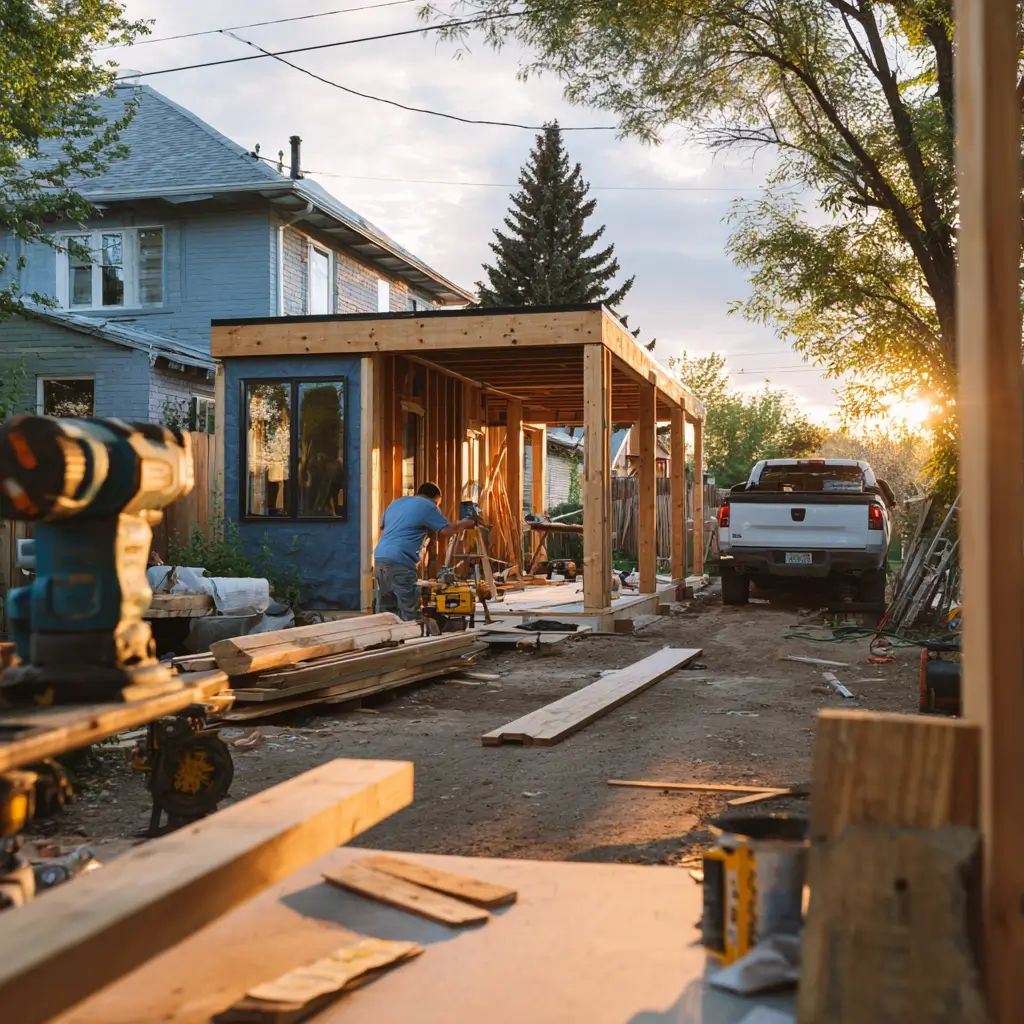
Once permits are issued, a detached ADU builds like a small custom home: site prep, foundation, framing, roofing, mechanical, electrical, and plumbing rough-ins, insulation, drywall, and finishes. Four to six months is typical for a detached unit. Conversions usually run shorter because the shell already exists, which is one reason converting an existing garage into an ADU is the most popular entry point in Denver.
The city inspects at every major phase: footing and foundation, rough framing, electrical, plumbing, HVAC, insulation, and drywall. Each inspection has to pass before the next phase starts, which protects you but also means one failed inspection can hold the schedule. Weather matters here too. Concrete pours and framing both get harder in a Denver winter, so a project that permits in late fall will usually carry more buffer than one that breaks ground in spring.
Final inspection and your Certificate of Occupancy
The finish line is the city's final inspection and the Certificate of Occupancy, the document that makes the unit legally habitable. Until the CO is issued, the ADU cannot be occupied or rented, no matter how finished it looks. After that, the remaining items are practical: utility accounts, a unit designation like Unit B for mail, and lease-up if you are renting. If rental income is the goal, it is worth reading up on what ADU rental income looks like in Denver before you set expectations.
What it costs and how long it takes
Most ADUs in Denver land between $180,000 and $400,000 built, depending on size, type, finishes, and whether the unit is attached or detached. The big cost drivers are square footage, utility tie-ins, and foundation work. The common surprises are tap fees for new water and sewer connections, which can run $10,000 or more, soils reports and structural engineering when conditions require them, and electrical panel upgrades in older homes. We break down the full picture in what an ADU costs to build in Denver in 2026, and if the number is bigger than your cash on hand, most of our clients use one of the financing options Denver homeowners use for ADUs.
On timeline, add the phases up: two to three weeks of feasibility, four to eight weeks of design, six to twelve weeks of permitting, and four to six months of construction. Most Denver ADUs take eight to twelve months from first conversation to Certificate of Occupancy. Anyone promising dramatically faster is either building a simple conversion or skipping steps you will pay for later.
Sequencing is the whole game
The ADU process rewards homeowners who front-load the unglamorous work: verify zoning before designing, make decisions during design instead of during construction, and budget for the costs that never show up in a rendering. The projects that go smoothly are not lucky. They are sequenced correctly from the first phone call. If you are weighing whether an ADU makes sense on your property, our ADU team can run the feasibility check before you commit to drawings, and you will know what your lot allows before it costs you anything to find out.