
How Much Does New Flooring Cost in Denver? A Room-by-Room Pricing Breakdown
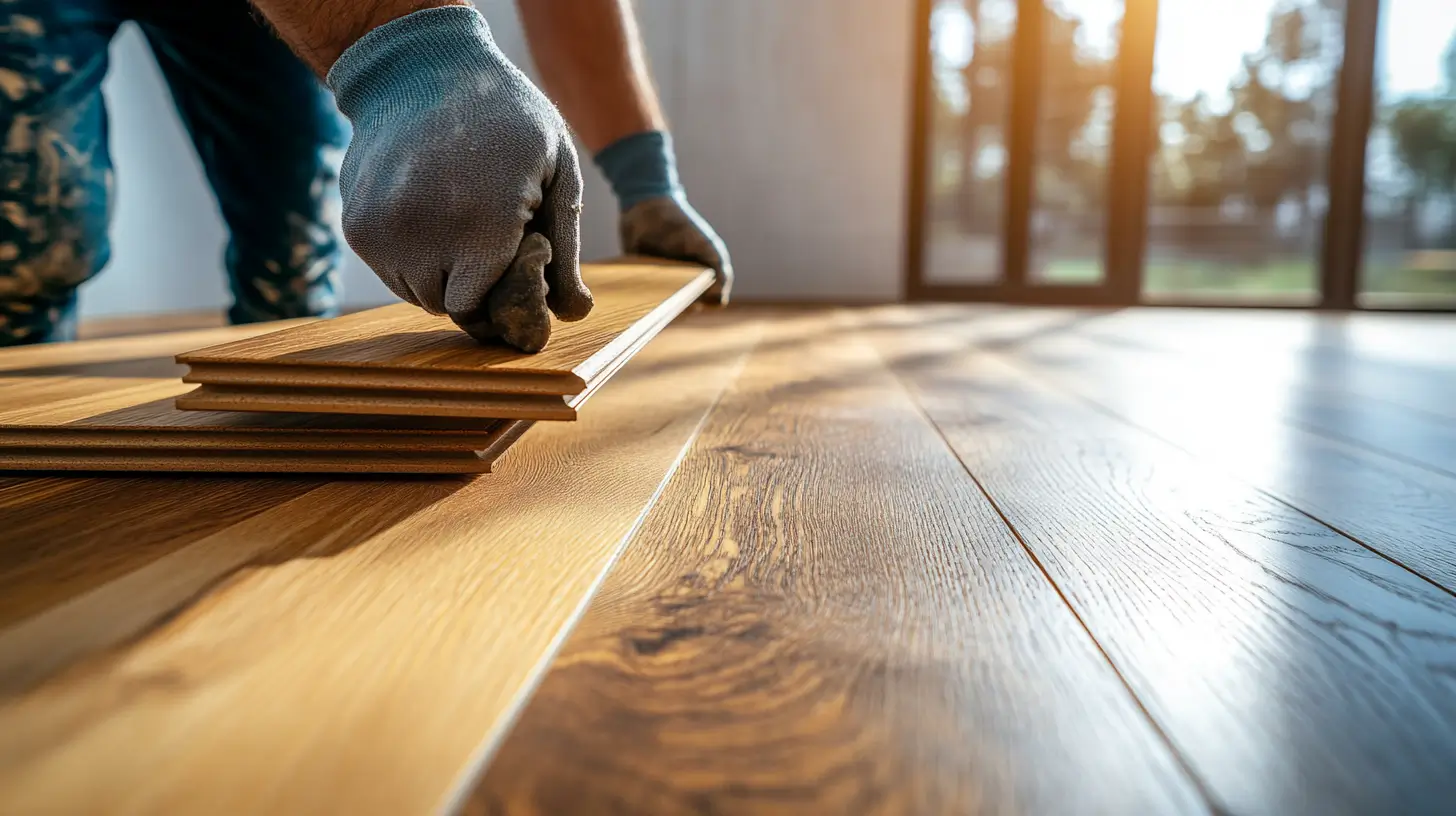
Whether you're renovating one room or replacing flooring throughout your entire home, understanding what flooring installation actually costs in Denver in 2026 helps you budget accurately and avoid sticker shock mid-project. Flooring prices vary significantly by material, room size, existing conditions, and the subfloor situation beneath -- and Denver's dry, high-altitude climate adds a few wrinkles that don't apply in other parts of the country.
This guide breaks down flooring costs by material and by room, explains what installation labor looks like in the Denver market, and flags the Denver-specific factors you need to account for before committing to a floor.
Flooring Cost Overview: Denver 2026
In the Denver metro area, homeowners pay between $5 and $22 per square foot installed for most flooring materials, including labor. Here's a quick-reference breakdown before we go room by room:
Luxury Vinyl Plank (LVP): $5 -- $12 per sq ft installed
LVP is the dominant flooring choice in Denver right now, and for good reason. It's dimensionally stable across Denver's humidity swings (more on that below), waterproof, durable, and available in convincing hardwood looks. Budget $5 to $8 per square foot for mid-grade LVP installed, or $9 to $12 for premium thick-core options with better sound absorption and a more realistic feel underfoot.
Engineered Hardwood: $8 -- $16 per sq ft installed
Engineered hardwood is a better choice than solid hardwood in Denver's climate and performs well across most of the home except wet areas. Expect $8 to $12 per square foot for mid-grade species and installations, up to $16 for wide-plank white oak or similar premium options. Installation method (floating vs. glue-down vs. nail-down) affects both labor cost and suitability for your subfloor type.
Solid Hardwood: $10 -- $22 per sq ft installed
Solid hardwood is the highest-end option and carries the highest price tag. In Denver, it's also the most climate-sensitive choice -- Denver's extremely low winter humidity (often below 20 percent RH) causes solid wood to shrink and crack more than in other markets. If you choose solid hardwood, budget appropriately for a whole-home humidification system or expect gapping. Cost ranges from $10 to $22 per square foot installed depending on species and plank width.
Porcelain or Ceramic Tile: $7 -- $18 per sq ft installed
Tile pricing varies enormously based on tile size, format, and pattern complexity. Large-format tiles (24x24 and up) cost more to install due to the skill and time required for proper leveling. Simple 12x12 or 12x24 field tile runs $7 to $10 installed; designer large-format or patterned installations run $14 to $18 per square foot. In Denver, heated tile floors (radiant) are popular in bathrooms and add $3 to $8 per square foot.
Carpet: $4 -- $9 per sq ft installed
Carpet remains a practical and cost-effective choice for bedrooms and basement living areas. Standard mid-grade carpet with pad runs $4 to $6 per square foot installed. Higher-end options with thicker pads run $7 to $9. Denver homeowners often choose carpet in basement bedrooms specifically -- the cushioning provides warmth underfoot in ground-contact spaces that can feel cold even with in-floor heat.
Room-by-Room Flooring Cost Estimates
Living Room (250 -- 400 sq ft)
The living room is the most visible space in the home, so most homeowners want their best floor here. LVP in the $7 to $9 range is the most common choice for value and durability; engineered hardwood at $10 to $14 is the premium move. For a 300-square-foot living room, budget $2,100 to $4,200 for LVP or $3,000 to $5,500 for engineered hardwood, installed.
Primary Bedroom (200 -- 300 sq ft)
Bedrooms are a natural fit for carpet or engineered hardwood. Carpet for a 250-square-foot primary bedroom runs $1,000 to $2,000 installed. Engineered hardwood in the same space runs $2,000 to $4,000 depending on the material selected.
Kitchen (150 -- 250 sq ft)
Kitchens need hard, waterproof surfaces. LVP and tile dominate here. For a 200-square-foot kitchen, budget $1,000 to $2,400 for LVP or $1,400 to $3,600 for tile depending on size and complexity. Note that kitchen flooring installation is more labor-intensive than open living spaces due to islands, appliances, and cabinetry that require precise fitting.
Bathrooms (50 -- 120 sq ft)
Tile is the standard for bathrooms. Small bathrooms are disproportionately expensive per square foot because the setup, labor, and waterproofing (cement board, membrane) costs are similar regardless of size. A 60-square-foot bathroom tile job with a simple subway tile runs $1,200 to $2,500 installed. Add $800 to $2,000 for in-floor radiant heat, which Denver homeowners value in bathroom spaces.
Basement (600 -- 1,200 sq ft)
Basements are where LVP and carpet dominate for a reason -- they handle the moisture variability and subfloor imperfections common in below-grade spaces. LVP for a 900-square-foot basement runs $4,500 to $9,000 installed. Carpet over LVP (carpet in living/bedroom areas, LVP in the family room) is a common approach. Avoid solid hardwood and most uncoated engineered hardwood in Colorado basements -- the moisture variability is too extreme.
Whole-Home Replacement (1,500 -- 2,500 sq ft)
Whole-home flooring replacements benefit from economies of scale on labor and materials. For a 2,000-square-foot home with a mix of LVP in living areas and carpet in bedrooms, budget $12,000 to $22,000 installed. Premium engineered hardwood throughout a similar-sized home runs $18,000 to $35,000.
What's Included in Installation -- and What Isn't
When getting flooring quotes in Denver, clarify exactly what's included. Quality installation bids should cover material, underlayment, adhesives, transition strips, removal and disposal of old flooring, and any minor subfloor repairs. Here's what often gets left out:
Subfloor Repairs
Squeaky floors, soft spots, high spots, and moisture damage in the subfloor need to be addressed before new flooring goes down. Subfloor repairs in Denver run $3 to $8 per square foot for problem areas -- a cost that's often discovered during demo and added to the invoice. Getting a subfloor assessment before bidding is worth asking for.
Furniture Moving
Many installers charge $50 to $150 to move furniture per room, or require you to clear rooms before installation. Confirm this upfront so you're not scrambling the night before installation day.
Stair Installations
Stair flooring is priced separately -- typically $40 to $100 per stair step for LVP or hardwood, and $30 to $60 per step for carpet. A standard 14-step staircase adds $600 to $1,400 to the project.
Denver's Climate: The Factor Most Homeowners Miss
Denver's climate is one of the driest in the continental United States. Average relative humidity swings from around 20 to 30 percent in winter to 50 to 60 percent in summer. This matters enormously for flooring selection:
Solid Hardwood
Wood expands in humidity and contracts in dryness. Denver's winters can push RH so low that solid hardwood floors develop visible gaps between planks. If you choose solid hardwood, plan on a whole-home humidifier ($600 to $2,500 installed) to maintain 35 to 50 percent RH. Without it, you'll likely see seasonal gapping within the first few winters.
Engineered Hardwood
The cross-ply construction of engineered hardwood makes it significantly more dimensionally stable than solid. It still has a real wood face veneer, so it's not immune -- but it handles Denver's humidity swings much better. Choose engineered boards with thicker wear layers (3mm+) for durability and refinishability.
LVP
LVP is 100 percent dimensionally stableble and impervious to humidity. This is a major reason it has become the default choice in Denver. The caveats are that cheap LVP can telegraph subfloor imperfections, and some products off-gas VOCs -- look for FloorScore or Greenguard-certified products.
Finding the Right Flooring Contractor in Denver
The quality of the installation matters as much as the material. A premium hardwood floor installed poorly will look worse and fail faster than a mid-grade floor installed by a skilled crew. When evaluating flooring contractors in Denver, ask for in-progress photos of recent jobs, proof of licensing and insurance, and references from projects of similar scope to yours.
Get itemized quotes that separate material from labor. A contractor who can only quote you a single "installed" price without breaking it down is harder to evaluate and harder to hold accountable if issues arise.
Ready to Start Your Flooring Project?
Denver Dream Builders handles full-home flooring installations alongside renovations, remodels, and new construction. We source quality materials at trade pricing and install with crews who do this work every day -- no subcontracting to whoever's available this week.
If you're ready to talk through your flooring project, contact us for a free consultation and estimate. We'll walk your space, assess your subfloor, and give you a complete picture of what your project will actually cost.