
Five Reasons Denver Homeowners Are Adding ADUs in the Spring
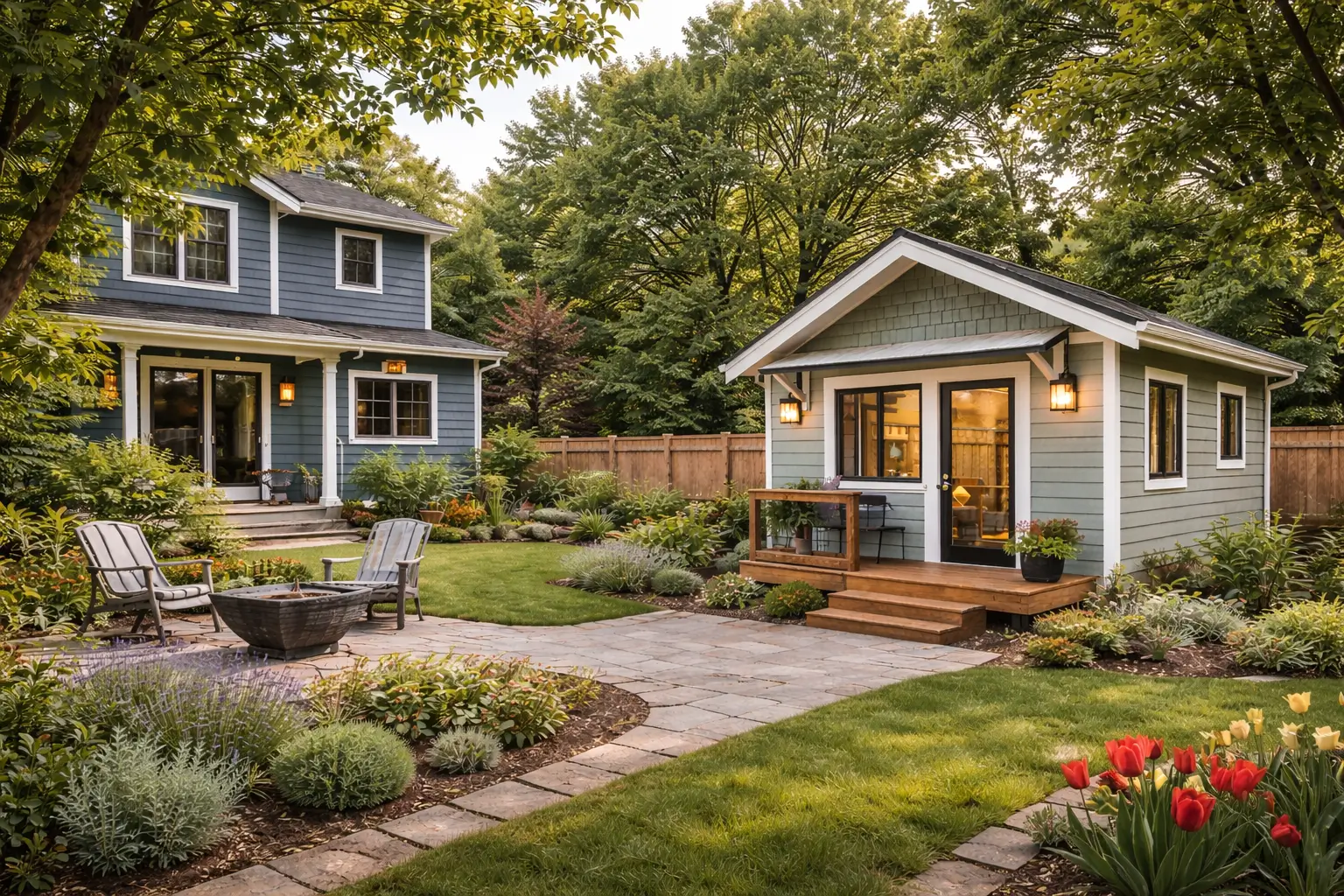
If you’ve been thinking about an ADU in Denver, spring is when the idea starts to feel real. The days get longer, the yard dries out, and the “maybe next year” projects suddenly look doable—especially if a tax refund is sitting in your account.
An ADU (accessory dwelling unit) is still a serious build. You’re not just putting a shed in the backyard. You’re adding a second, code-compliant home on your lot—complete with foundations, utilities, inspections, and a real construction schedule.
But spring does have some practical advantages, and there are a few clear reasons Denver homeowners keep coming back to backyard units. Let’s walk through the decision the same way we would on a jobsite: what you gain, what you’re really signing up for, and what to line up early so the project stays controlled.
Denver Dream Builders writes in a calm, practical, homeowner-first style per our internal tone rules.
First: what counts as an ADU in Denver?
In plain terms, an ADU is a separate dwelling unit on the same lot as your primary house. It typically has its own kitchen, bathroom, sleeping area, and independent living space. Denver’s zoning and permitting process treats it as a dwelling unit, which is why the design and review requirements are closer to “building a small house” than “finishing a garage.” Denver’s Community Planning & Development department has a dedicated ADU permitting page, and it’s worth reading before you get too far into design decisions. (Denvergov)
One important local wrinkle: ADU rules are not “one-size-fits-all” across the metro. Denver is Denver. Aurora is Aurora. Unincorporated Arapahoe County is its own universe. Even within Denver, historic districts and landmark properties add another layer of review. (Denvergov)
So when you hear someone say, “My friend built one in six months,” treat that as a story—not a schedule.
Why spring is a common window for Denver ADU projects
Spring is popular because it aligns with real-world construction logistics:
- The ground is usually workable again, which matters for foundations, sewer tie-ins, and exterior flatwork.
- Weather interruptions tend to be more predictable than mid-winter cold snaps or heavy snow events.
- Longer daylight helps crews stay productive without pushing work into awkward lighting conditions.
None of that guarantees speed. Permitting, design, and utility coordination can still take time. But spring is often a smoother runway to get a project moving—especially if you’re starting from “concept” and want to be building during the longest stretch of workable weather.
5 reasons Denver homeowners are adding backyard units
1) A flexible place for family that still preserves privacy
This is the most common, least flashy reason—and it’s a good one.
Homeowners build ADUs to handle life changes without forcing everyone under the same roof:
- A parent who’s doing fine but doesn’t want stairs.
- A young adult who needs a soft landing for a year or two.
- A long-term guest situation that’s starting to feel like it needs boundaries.
A backyard unit creates separation that makes day-to-day living calmer. It’s not about avoiding each other. It’s about giving everyone a place that’s truly theirs.
Spring timing matters here because family-driven projects often have a date attached to them: a move, a graduation, a job change, a health shift. If you’re trying to line up a usable unit by late fall, spring is when you want the wheels turning.
Reality check: If your goal is “Mom can move in by August,” you need to start earlier than most people think. The design and permitting phase can be the longest part of the project.
2) A long-term rental option that doesn’t require changing your main house
Some homeowners don’t want to convert a basement or rework the main house for a rental. They want their home to stay their home.
A detached ADU keeps the rental separate:
- Separate entry.
- Separate utilities in many designs (depending on configuration and approvals).
- Less wear-and-tear inside your primary living space.
It also gives you options. You can rent it now, then use it for family later (or the other way around). That flexibility is one reason ADUs have staying power as a planning tool.
Colorado and Denver have been actively updating ADU policy in recent years, including Denver’s move toward allowing ADUs citywide and state-level legislation that affects how jurisdictions handle ADUs and related restrictions. (Denvergov)
Because rules and enforcement details can change, the safe approach is to treat “what you can do” as something to verify early through zoning review—not something to assume from a neighbor’s project.
Reality check: Being “allowed” to build an ADU doesn’t mean every lot is equally easy. Utility routing, access, setbacks, and any design review constraints can still shape what’s feasible.
3) Better use of an underperforming backyard (without giving up the whole yard)
A lot of Denver lots have a backyard that’s… fine. Grass, fence, maybe a patio. But the space isn’t working hard. A well-planned ADU can improve how the entire property functions—especially if the design includes:
- A defined shared yard area (still usable and not dominated by the structure).
- Clear paths and lighting.
- Smarter fence and gate layout for privacy.
- Storage solutions that replace what the garage used to do.
This is where “builder thinking” matters. Backyard units succeed when the site plan is treated like a system. If you cram a building into the far corner and leave everything else as an afterthought, the yard often feels smaller than it needs to.
Spring helps because it’s easier to see your site: drainage patterns, muddy low spots, where snow piles up, where water sits. That kind of observation leads to better decisions about grading, patios, and access routes.
Reality check: If you’re converting an existing garage into an ADU, you need a plan for storage and parking behavior. Those are the practical issues that create homeowner regret later.
4) A cleaner construction timeline than many interior remodels
This surprises people.
An ADU is a major project, but it can be less disruptive than a full interior renovation because a big chunk of the work happens outside your main living space. You’ll still feel it—noise, crews, deliveries, inspections, and yard access—but you’re not necessarily living inside a dust zone for months.
Spring building projects often work well here because you can keep windows open, use the yard more comfortably while work is happening, and generally tolerate the “site activity” better than you would in January.
Reality check: Yard access is everything. If your site logistics require crews to move through your house daily, disruption goes up fast. A good plan protects your routines as much as possible.
5) Spring is a practical time to line up design, permits, and utilities in the right order
This is the least exciting reason, but it’s the one that keeps projects from dragging.
A controlled ADU project usually follows this sequence:
- Feasibility + zoning check
Before you fall in love with a floor plan, confirm what your lot can support. Denver’s zoning framework and ADU guidance is detailed, and the city has published specific ADU resources and permitting pathways. (Denvergov) - Site measurements and a real survey (when needed)
Setbacks and placement decisions depend on accurate site info. - Concept design that matches your actual constraints
This is where a lot of online plans fail. They weren’t drawn for your lot. - Permit drawings + structural coordination
If you want fewer surprises, you don’t skip engineering conversations. - Permitting + any required design review
If you’re in a historic district or on a landmark property, plan for additional review steps and design guidelines. (Denvergov) - Utility planning (sewer, water, electrical, gas as needed)
Denver’s own ADU materials call out permits and items like sewer use considerations for new habitable space. (Denvergov)
Spring is a good time to start because you can get the front-end steps moving while conditions support site work soon after approvals come through.
Reality check: Many projects “start” in spring but don’t pour concrete until later because the front-end work wasn’t started early enough.
What to consider before you commit to a spring ADU build
A few practical factors decide whether spring is truly your best window.
Your lot constraints: access, setbacks, and buildability
Backyard units live or die on logistics:
- Can equipment reach the build area without damaging everything?
- Where will materials be staged?
- How will concrete trucks, dumpsters, and deliveries enter and exit?
- Do you have overhead lines, tight alley turns, or limited gate width?
These aren’t small details. They affect cost, schedule, and what design makes sense.
Permitting and review realities in Denver
Denver has specific pathways for ADU permits and publishes guidance through Community Planning & Development. (Denvergov)
Even with clear guidance, the real timeline depends on:
- Completeness of your submittal
- How quickly corrections can be addressed
- Inspection availability
- Any special reviews tied to your property
If your property falls under landmark/historic design review, you should assume extra steps and plan accordingly. (Denvergov)
The policy landscape is changing—so verify early
Denver City Council approved a citywide ADU measure to allow ADUs in all residential areas, and it connects to state legislation affecting ADU rules and certain restrictions. (Denvergov)
That’s a positive direction for homeowners, but it also means there can be transitional details as code updates and processes catch up. The safe move is simple: verify your lot’s status and requirements early, and don’t assume an online checklist applies perfectly to your address.
Budget timing and tax refund season
A tax refund can help fund early-phase costs like:
- Survey work
- Initial design
- Engineering
- Permit application prep
Just don’t let the refund dictate the schedule. The best ADU builds are paced by permitting, planning, and sequencing—not by a single funding event. If you’re financing, spring is also a reasonable time to line up your lender requirements while design is underway.
Contractor availability and scheduling
Spring is when everyone wants to build. Good builders are usually booking ahead, and trades are balancing multiple starts. If your goal is a calm project, earlier planning typically beats last-minute scrambling—even if the actual build doesn’t begin until summer.
What a realistic spring-to-fall ADU timeline can look like
Every project varies, but here’s the pattern many homeowners experience:
- Late winter / early spring: feasibility, concept design, site info, initial pricing alignment
- Spring: permit drawings, engineering, permitting submittal, early utility planning
- Late spring / summer: approvals, site work, foundation, framing, rough-ins
- Late summer / fall: insulation, drywall, finishes, exterior completion, final inspections
That timeline can compress or expand depending on complexity, review requirements, and how quickly decisions are made. The point isn’t the exact months—it’s the flow. When the front-end is handled thoughtfully, the build phase is more predictable.
So—should you build an ADU this spring?
Spring is a smart window if:
- You’re ready to do the upfront planning work now (not later)
- Your lot logistics are workable
- You’re comfortable with a real permitting process
- Your reasons for building are clear and long-term
If you’re still uncertain, don’t force it. The best first step is often a feasibility check that answers the real questions: what’s allowed on your lot, what type of backyard unit makes sense, and what the sequencing would look like if you moved forward.
A calm, optional next step: if you’re trying to decide whether an ADU in Denver is feasible for your property this spring, getting a professional read on zoning, site constraints, and project flow can save a lot of wasted design effort.