
Building on a Sloped Lot in Colorado: What Impacts Cost, Design, and Timeline
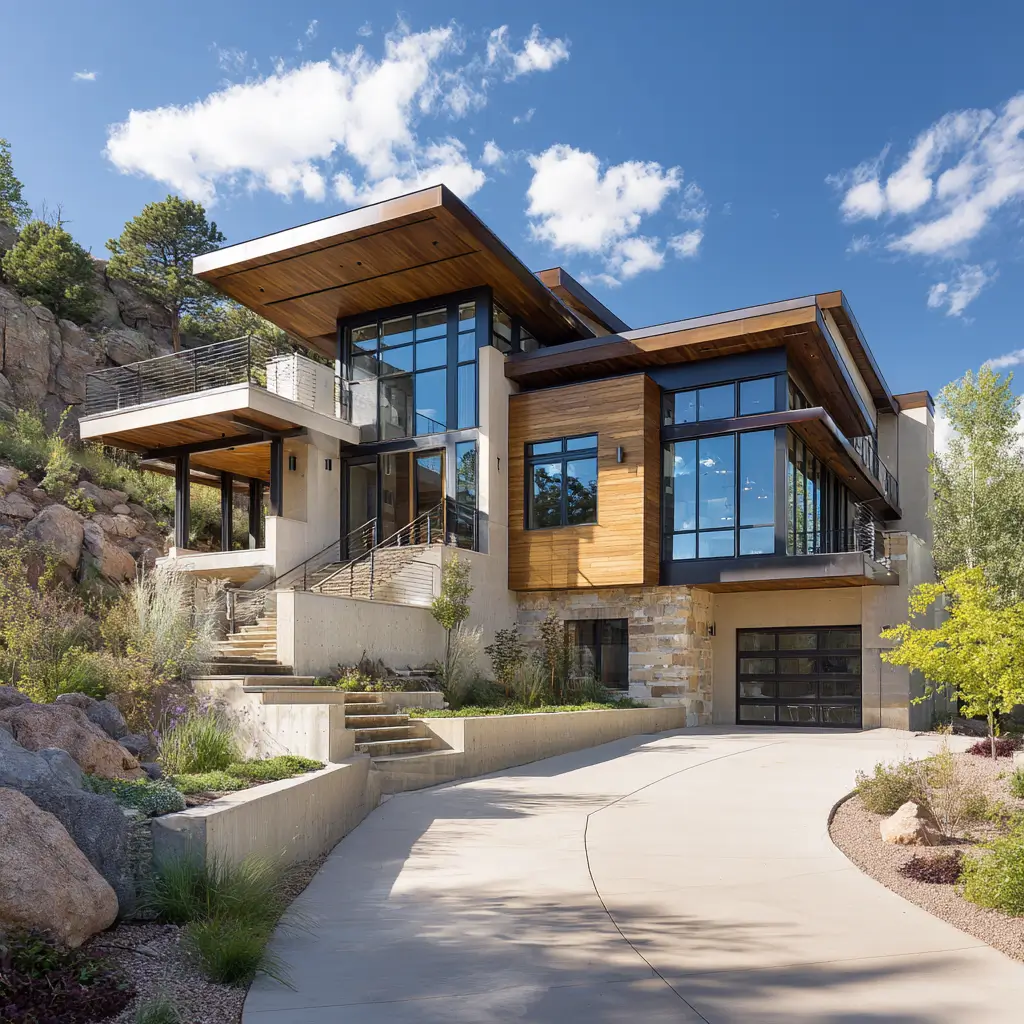
Sloped lots are common throughout Colorado, particularly in foothill communities, older neighborhoods, and areas where homes were built to follow the natural terrain rather than flatten it. These sites often come with attractive views and architectural potential, but they also introduce construction considerations that don’t exist on flat ground.
Building on a slope isn’t inherently problematic. In many cases, it allows for more dynamic layouts and better use of the landscape. However, slope changes how a project is planned, engineered, permitted, and built. Homeowners who understand these differences early are far better positioned to make informed decisions and avoid unexpected costs or delays once construction begins.
How Slope Changes the Foundation Strategy
On sloped lots, the foundation is rarely a simple, uniform system.
Rather than a single flat plane, foundations often need to step with the grade or be engineered to accommodate changes in elevation. This can include stepped footings, stem walls of varying heights, partial basements, or walk-out lower levels that open directly to grade on one side of the home.
These approaches are common and effective, but they introduce additional coordination. Engineering must account for uneven loads, transitions between levels, and how the structure interacts with the soil at different elevations. Concrete placement becomes more complex, reinforcing requirements increase, and sequencing between excavation and foundation work becomes more critical.
The steeper the slope, the more important it is that the foundation is designed as an integrated part of the overall structure rather than treated as a standard, off-the-shelf solution.
Excavation, Access, and Site Logistics
Excavation on a sloped lot is one of the most variable parts of the project.
Access for heavy equipment is often limited by the grade itself, existing structures, or narrow lot lines. In some cases, equipment must approach the site from a specific direction or operate within tighter clearances, which can slow progress and affect cost.
Managing soil removal and placement is also more technical on a slope. Over-excavating can destabilize surrounding areas, while under-excavating can limit usable space or create drainage problems. On many projects, careful balancing of cut and fill is required to maintain stability and reduce the need for additional retaining structures.
These factors don’t just affect excavation day — they influence how the entire site functions throughout construction, including material deliveries, staging areas, and crew movement.
Drainage and Water Management Become Critical
Water behaves differently on sloped sites, and in Colorado’s climate, that difference matters.
Snowmelt, spring runoff, and sudden summer storms all move downhill with force. Without proper planning, water can collect against foundations, flow toward living spaces, or overwhelm surface grading. These issues may not appear immediately, but they can create long-term performance problems if not addressed upfront.
On sloped lots, drainage strategies often go beyond standard approaches. This may include enhanced foundation waterproofing, drain tile systems designed to daylight away from the structure, and surface grading that intentionally redirects water along controlled paths.
Good drainage planning isn’t a cosmetic upgrade — it’s a foundational requirement that protects both the structure and the interior spaces over time.
Design Implications: Constraints and Opportunities
Slope shapes design more than many homeowners expect.
Entry points, garage placement, and floor-to-floor relationships often need to respond to grade rather than preference alone. For example, a main-level entry on a flat lot might become a split-level or walk-out configuration on a slope. Ceiling heights, stair locations, and circulation paths are frequently influenced by how the home steps with the terrain.
At the same time, sloped lots can offer meaningful design opportunities. Walk-out lower levels can create natural separation between living spaces. Elevated main floors can capture views and daylight. Changes in elevation can support more intentional zoning within the home.
The key is aligning expectations early. When design decisions are made with the site in mind from the start, sloped lots tend to feel purposeful rather than restrictive.
Permitting and Engineering Considerations
Sloped lot projects typically involve more upfront review during permitting.
Many municipalities require additional documentation when construction occurs on uneven terrain. This can include geotechnical reports to assess soil conditions, structural engineering specific to slope-related loads, and detailed retaining wall designs when applicable.
While these requirements add time at the beginning of a project, they help reduce risk during construction. Clear documentation allows inspectors to verify compliance more efficiently and minimizes the likelihood of mid-project revisions or stop-work issues.
Starting these processes early is one of the most effective ways to keep a sloped lot project on schedule.
How Slope Affects Cost and Timeline
Building on a slope often increases cost, but not always in obvious ways.
Foundation complexity, excavation scope, engineering requirements, and site access all influence pricing. In some cases, costs rise due to material quantities. In others, labor and coordination are the primary drivers.
Timeline impacts tend to occur earlier in the project. Excavation, foundation work, and inspections may take longer than they would on a flat site. Once the structure is established, framing and interior work often proceed at a more typical pace.
Understanding where additional time and cost are likely to occur helps homeowners plan realistically rather than relying on assumptions based on flat-lot construction.
Why Early Planning Matters More on Sloped Lots
More than any other factor, sloped lot projects benefit from early, coordinated planning.
Decisions made during design — such as foundation type, finished floor elevations, and drainage paths — are difficult and expensive to change once construction is underway. When design, engineering, and construction teams are aligned from the start, potential challenges are addressed on paper instead of in the field.
This doesn’t eliminate complexity, but it makes that complexity manageable.
Final Thoughts
Building on a sloped lot in Colorado requires a different approach than building on flat ground, but it doesn’t have to feel unpredictable. With proper planning, realistic budgeting, and attention to site-specific details, sloped lots can support durable, well-designed homes that respond naturally to their environment.
Understanding how slope affects construction allows homeowners to make informed decisions early — before the ground is broken and before small assumptions turn into larger problems.