
Bathroom Remodel Textures That Change How the Space Feels
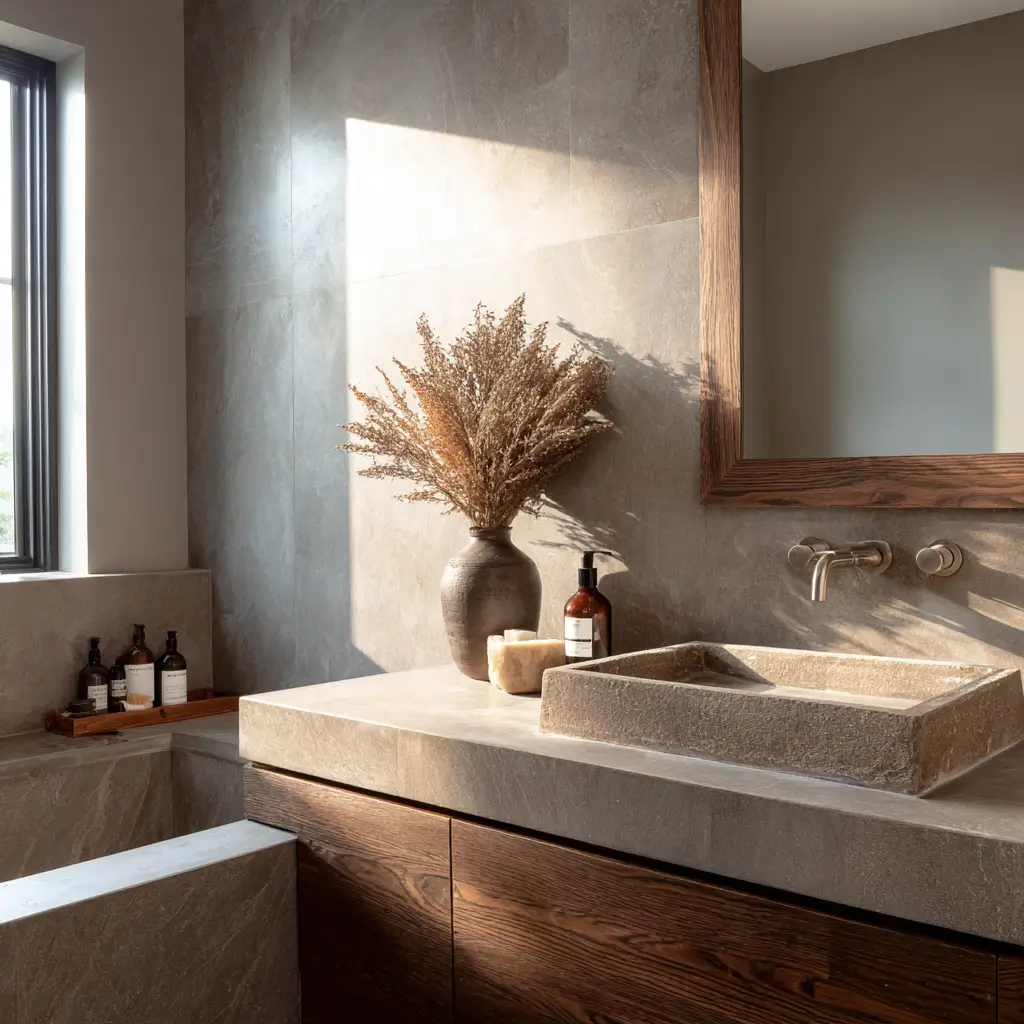
In a bathroom, texture does more than add visual interest. It affects how the room sounds, how light moves, and whether the space feels restorative or purely functional. Because bathrooms are smaller and more enclosed than kitchens or living areas, texture choices tend to show up faster and feel more intense — for better or worse.
A well-designed bathroom balances smooth, cleanable surfaces with softer or more tactile elements that take the edge off. The goal isn’t contrast for contrast’s sake. It’s comfort, longevity, and restraint.
Below are the textures that most strongly shape the experience of a remodeled bathroom — and how to use them without overdoing it.
Stone and Stone-Look Surfaces: Calm, Weight, Permanence
Stone immediately signals durability and calm. Whether natural or porcelain, it brings visual weight that makes a bathroom feel grounded instead of temporary.
In bathrooms, stone works best when it isn’t everywhere. A stone vanity top, shower wall, or feature floor creates a sense of permanence without overwhelming the room. Honed or matte finishes tend to feel quieter and more spa-like than polished surfaces, which can feel cold or overly reflective under bathroom lighting.
The key is consistency. Mixing too many stone patterns or veining styles quickly becomes busy in a small space.
Tile Texture: Subtle Variation Beats Pattern
Tile is often where texture shows up first, but it’s also where bathrooms go wrong.
Instead of bold patterns or high-contrast grout lines, subtle surface variation tends to age better. Slightly uneven handmade-look tiles, soft ridging, or gentle surface movement create depth without demanding attention.
Vertical stacking or larger-format tiles reduce visual noise and make walls feel taller and cleaner. When tile texture is doing the work, color can stay restrained.
This is especially important in showers, where too much visual texture can feel chaotic rather than relaxing.
Wood and Wood Tones: Warmth Without Softness
Bathrooms need moisture-resistant materials, but they still benefit from warmth. Wood tones — whether solid, engineered, or high-quality wood-look materials — introduce that warmth without sacrificing durability.
Vanities, open shelving, or trim details are the safest places to bring in wood texture. Natural grain breaks up hard surfaces and makes the room feel lived-in rather than clinical.
Lighter, less glossy finishes tend to feel more natural and less “furniture-like,” which helps them blend into the architecture instead of standing out.
Plaster, Limewash, and Soft Wall Finishes: Quiet Depth
When used correctly, soft wall textures can completely change how a bathroom feels.
Plaster-style finishes, microcement, or limewash coatings create gentle depth that reacts to light throughout the day. These finishes don’t shout, but they prevent walls from feeling flat or sterile.
They work especially well in powder rooms or primary bathrooms where moisture levels are controlled and ventilation is properly designed.
The effect is subtle but powerful: the room feels calmer, quieter, and more intentional.
Glass and Reflection: Openness Without Exposure
Glass is a texture too — just one that disappears when used well.
Clear shower glass keeps bathrooms feeling open and uninterrupted, especially in smaller layouts. Frosted or textured glass adds privacy while softening light, which can be useful in shared or street-facing bathrooms.
The mistake is mixing too many glass finishes. One approach, repeated consistently, keeps the space feeling cohesive rather than fragmented.
Metal Finishes: Texture Through Touch, Not Shine
Metal shows up constantly in bathrooms, but its texture is often overlooked.
Brushed, satin, or matte finishes feel quieter and more tactile than polished chrome. They reduce glare and fingerprints while aging more gracefully over time.
Keeping metal finishes consistent across fixtures, hardware, and accessories helps the room feel settled instead of pieced together.
In bathrooms, restraint matters more than contrast.
Bringing It All Together
The most successful bathroom remodels don’t rely on standout materials. They rely on balance.
Smooth surfaces make cleaning easy. Textured surfaces soften the experience. When those two ideas are in conversation, the room feels calm, functional, and long-lasting.
Texture isn’t about decoration here. It’s about how the space supports daily routines without demanding attention.